

Tatami Making Experience in Kyoto: Learn About Japanese Traditional Craft at Yamada Tatami Shop
We have been to Kyoto more than six times in different seasons and on different types of trips. This time, instead of only checking off the usual temples and tea houses, we wanted to slow down and actually make something.
That is how we ended up at the tatami workshop at Yamada Tatami Shop.
Tatami is not just a floor mat. It is the scent of igusa grass when you slide open a shoji door, the textured flooring of centuries old tea rooms, and a piece of Japanese tradition that still shapes how homes and rituals feel today.
At Yamada, you do not just hear about that history. You sit at the workbench, handle the real materials, and craft your own mini tatami mat to take home.
This hands on tatami making experience quickly became one of our favorite Kyoto fun things to do. In this guide, we share what tatami really is, its history, how the workshop works, and why this little piece of Kyoto might be the most meaningful souvenir you will ever pack in your suitcase.
Plan your trip with our favorite resources
Where to Stay in Japan: check best deals
Transport & activities: klook.com (save up to 10% with code DANAYAO)
eSIM for Japan: stay connected with Airalo
What is Tatami?
At first glance, tatami looks like a simple woven mat on the floor, but it is actually a carefully crafted piece of Japanese tradition.
The word tatami (畳) comes from the verb meaning “to fold” or “to pile up,” which hints at its origins as something light and movable rather than the fixed flooring we see today.
A tatami mat is built from three main parts:
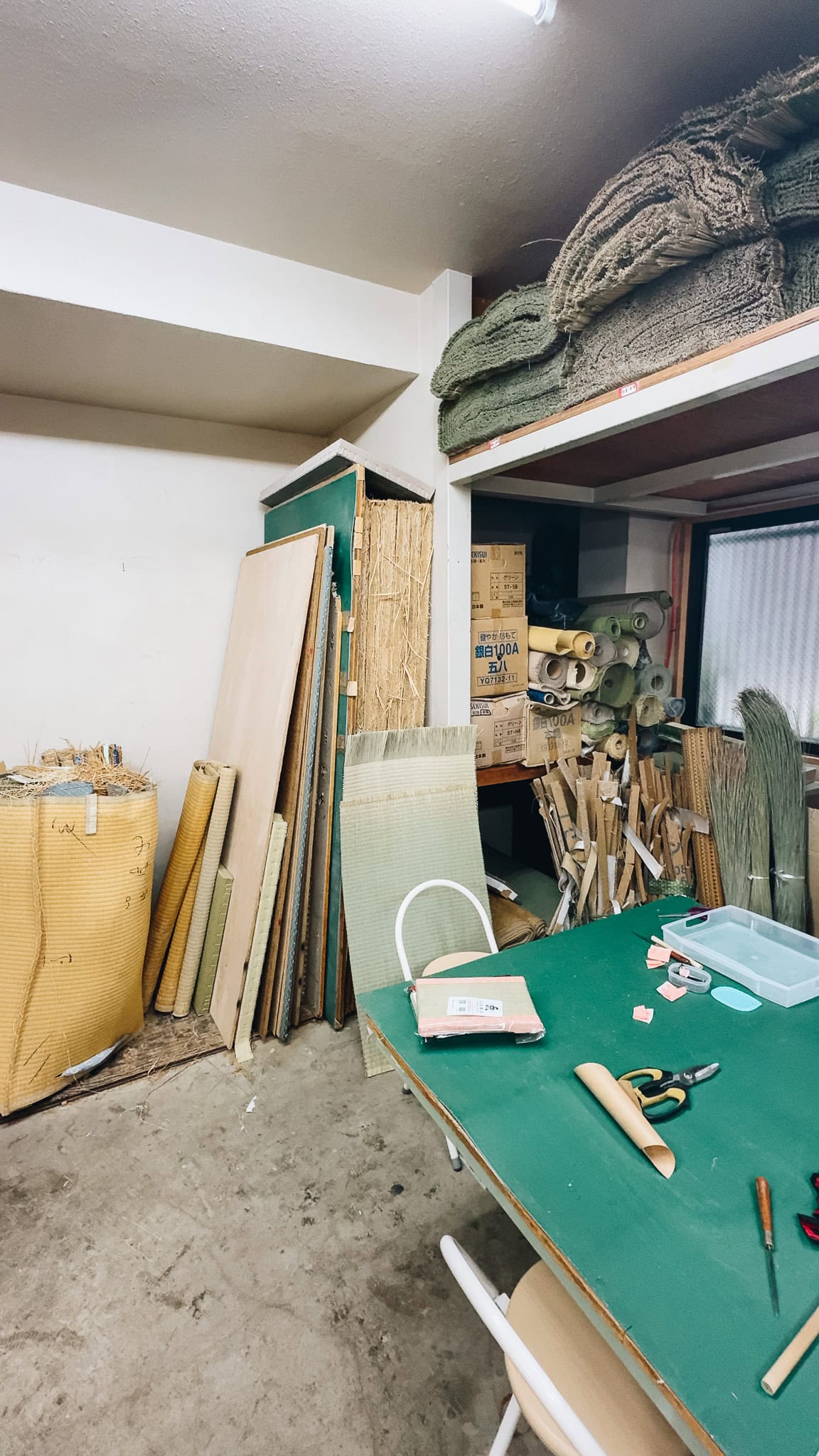
- The toko (base), traditionally layers of rice straw that give the mat its structure and cushioning
- The omote (surface), woven from soft rush grass called igusa that gives tatami its distinctive scent and smooth yet firm texture
- The heri (border), a fabric trim that protects the edges while also adding a decorative touch
Put together, these elements create something practical, beautiful, and deeply tied to Japanese aesthetics. Slide open the door of a tea house, sit inside a tatami room at a ryokan, or step into a traditional temple hall, and you immediately feel how this flooring sets the tone.
It is not just functional. It is Japan’s culture woven into the room itself.


A Brief History of Tatami
Tatami has been part of Japanese life for over a thousand years. The earliest versions appeared in the Nara Period (710–794) as thin, foldable mats that were easy to move around.
Back then, they were more like portable seating than permanent flooring.
By the Heian Period (794–1185), tatami had transformed into something thicker and more refined, showing up in the homes of aristocrats and samurai families.
Having tatami was a sign of privilege and cultural sophistication. Ordinary households did not see much of it yet.
Over the centuries, tatami spread more widely and eventually became the standard flooring in Japanese homes. For generations, people sat, ate, and slept directly on tatami, and entire rooms were measured by how many mats they could hold.
Even today, “six tatami room” or “eight tatami room” is still used to describe size in real estate.
In modern Japan, tatami is less common in everyday homes because it is expensive to maintain and time consuming to produce. Each mat requires skilled craftsmanship and high quality natural materials. Many families now only have a single tatami room, if at all.
That is part of why traditional tatami shops like Yamada are so important. They keep this craft alive, and through workshops, they give visitors a chance to connect with it before it disappears from daily life.


Where Can You Make Your Own Tatami in Kyoto?
If you want to experience tatami beyond just walking across it, Kyoto is the place to do it. The city is known for its tea culture and traditional crafts, and tucked away in a quiet neighborhood is Yamada Tatami Shop.
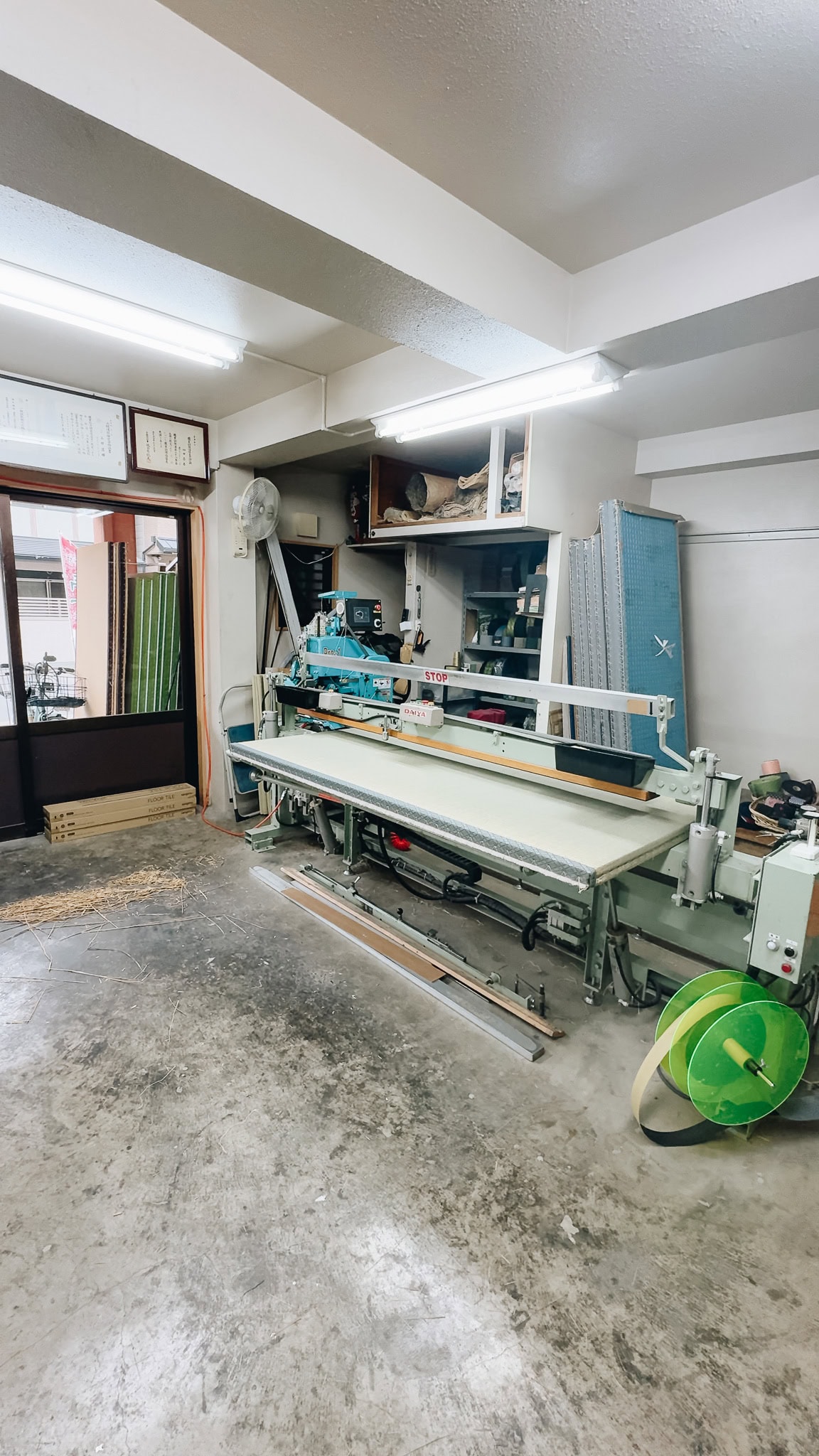
This is not a tourist-only setup. Yamada is a working tatami shop that handles real tatami jobs for local clients.
On top of that, they run a cultural workshop designed to raise awareness about the craft. This is where you can sit down with skilled craftsmen, learn the basics of tatami, and create your own mini tatami mat to take home.
It is one of those activities that feels both fun and meaningful. Instead of just buying a souvenir, you actually make one. And because you are doing it inside a genuine tatami shop with professionals who spend their lives working with these materials, the experience feels authentic rather than staged.
About Yamada Tatami Shop in Kyoto
Yamada Tatami Shop is one of those Kyoto gems that feels both local and timeless. This family run workshop has been making and repairing tatami for three generations, starting with the current owner’s great grandfather.
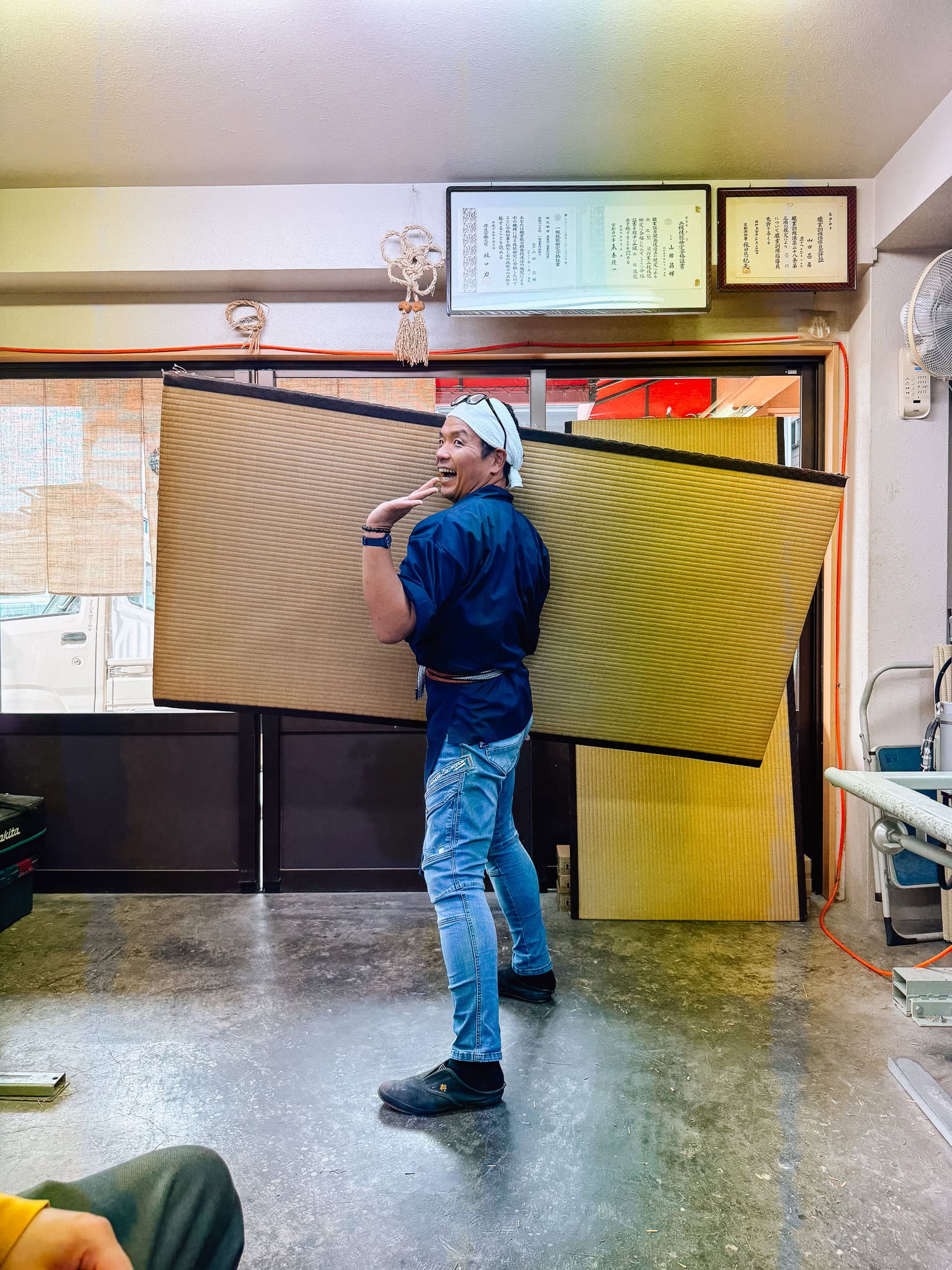
Today, the shop is led by a certified tatami master who trained formally in the art of tatami mounting.
When we visited, it was obvious how much pride the craftsmen and staff take in their work. They were warm, welcoming, and genuinely excited to share their knowledge. You feel like part of their mission to keep tatami alive in a world where fewer and fewer people grow up with it in their homes.
The shop balances tradition and modern outreach in a smart way. On one hand, they still produce custom tatami mats for local families. On the other, they invite travelers into the workshop to learn the basics and craft a mini mat of their own.
Recently, the shop reduced the number of workshops they host so they can dedicate more time to their local clients. That means the available workshop spots are rare and fill quickly, which makes getting in on one feel even more special.

Shop Access and Information
Yamada Tatami Shop is located in a quiet residential part of Kyoto, about a 12 minute walk from Enmachi Station. Workshops cost ¥6,000 for adults and ¥4,500 for children.
Each session lasts 90 to 120 minutes, with start times at 10:30 AM and 2:00 PM. Classes are offered in both English and Japanese, so you will be able to follow along no matter your language skills.
Reservations are required and should be made as early as possible, since the reduced schedule means there are fewer opportunities to join.
One important detail: the shop only accepts cash. Make sure to bring yen with you so you are not scrambling at the last minute.
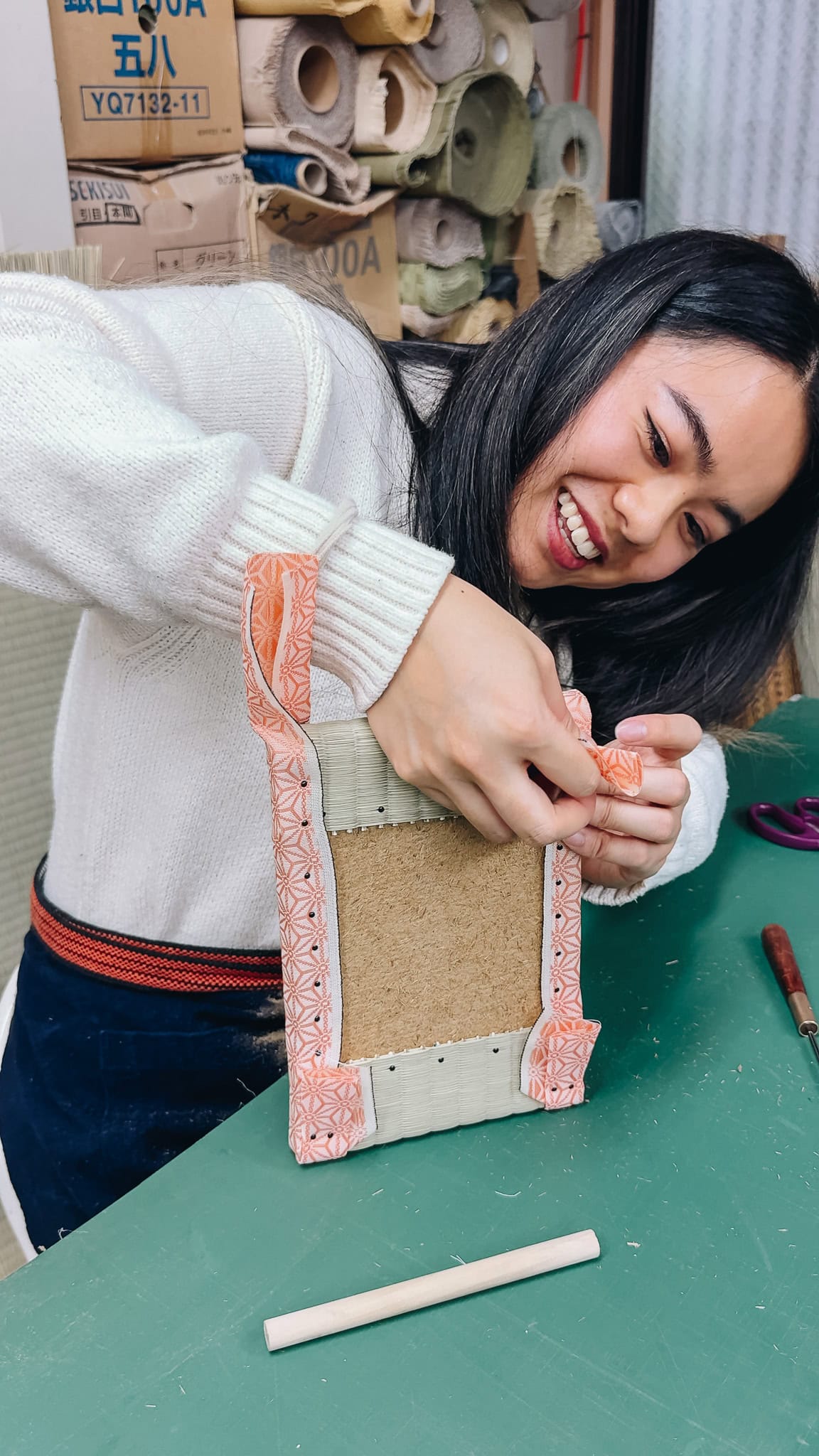
Everything You Need to Know About the Tatami Making Workshop
The tatami workshop at Yamada Tatami Shop has two parts. First, you learn about tatami’s history, materials, and role in Japanese culture. Then, you get hands on and make your own mini tatami mat.
Part 1: Learning About Tatami
The session starts with an introduction to tatami: what it is, how it has been used across Japanese history, and why it is less common in modern homes.
The staff walk you through the three key components: toko (base), omote (woven surface), and heri (border). You can see and touch different materials, smell the natural igusa grass, and even compare high quality Japanese rush with cheaper imported alternatives.
It is not a dry lecture. The craftsmen share their own experiences, answer questions, and explain how much work goes into making even a single full sized mat.
By the end, you understand why tatami shops like Yamada are such a rare find today.
Part 2: Hands On Tatami Making
Once you have the background, it is time to create your own mini tatami.
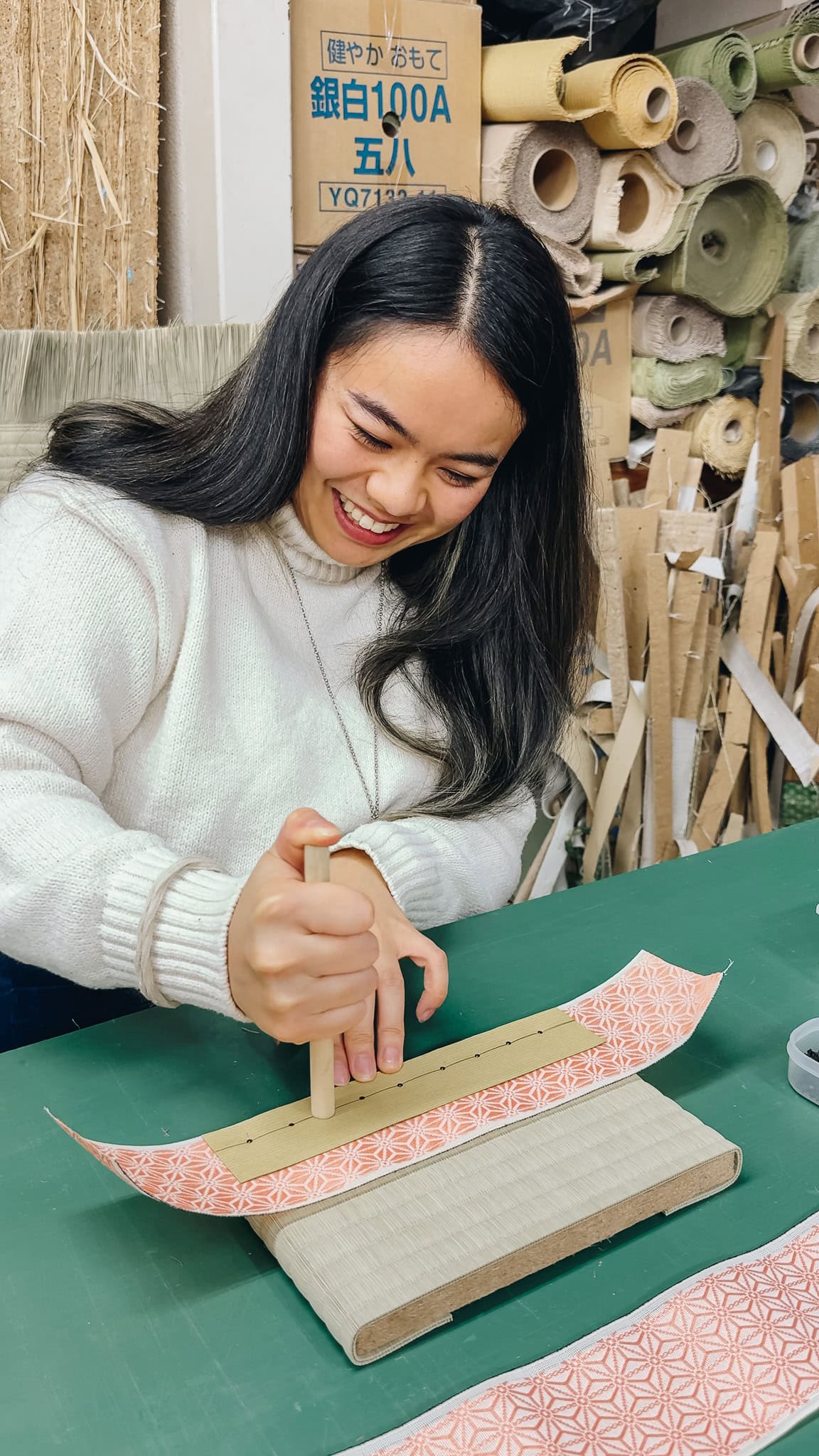
With guidance from the craftsmen, you secure the woven surface to the base using traditional tools. Next, you choose your border from a range of colorful patterns.
Attaching the fabric neatly is kinda satisfying: fold, press, and nail the edges until you have a clean finish.
The process is approachable even if you are not “crafty.” The staff are patient and make sure your mat turns out beautifully. You trim away the excess, admire the crisp lines, and before you know it, you are holding a mini tatami mat you made yourself.
For us, the highlight was not just the making, but chatting with the craftsmen along the way. Hearing their personal stories and how the shop evolved over generations added depth to the experience.
You leave not only with a handmade souvenir but also a real connection to Kyoto craftsmanship.

Why a Handmade Mini Tatami Mat Is the Perfect Souvenir
Kyoto is full of souvenirs, but most of them end up as clutter once you get home. A mini tatami mat is different. You made it with your own hands, guided by real craftsmen, and it carries a story that no store-bought trinket can match.
It is also practical. The mat is compact, lightweight, and easy to fit into your luggage without worrying about space. Once home, it works as a decorative piece, a coaster, or even a small display mat for tea cups or keepsakes.
Every time you see it, you remember the smell of fresh igusa, the feel of the tools in your hands, and the warmth of the workshop staff.
Unlike mass-produced souvenirs, your mini tatami is both personal and meaningful. It is not just a reminder that you went to Kyoto. It is proof that you stepped into a centuries-old tradition and played a small role in keeping it alive.
Tips for Planning Your Visit
To make the most of your tatami workshop at Yamada Tatami Shop, keep these practical tips in mind:
Book early: The shop reduced the number of workshops they host, so spots are limited and fill quickly. Secure your reservation as soon as you know your travel dates.
Bring cash: The workshop does not accept credit cards, so come prepared with yen to avoid any last-minute stress.
Arrive on time: Staff members wait outside the shop to greet participants, and late arrivals may not be accommodated. Aim to get there a little early.
Language friendly: Sessions are available in both English and Japanese, so you will be able to follow along even if you do not speak Japanese.
Plan for about two hours: Workshops usually run between 90 and 120 minutes, depending on the group’s pace, so leave enough room in your Kyoto itinerary.
Following these tips helps you enjoy the workshop stress free and focus on what really matters: making your mini tatami and connecting with one of Kyoto’s most meaningful traditions.
Conclusion
The tatami making experience at Yamada Tatami Shop is more than just a fun activity.
It is a chance to step inside a working Kyoto craft studio, learn directly from skilled artisans, and leave with a handmade souvenir that actually means something.
We have done a lot of cultural activities in Kyoto, but this one stood out. It was hands on, personal, and rooted in a tradition that is becoming rare in modern Japan.
By the time you finish your mini tatami mat, you will not just understand how these mats are made. You will feel connected to the heritage behind them.
If you are looking for Kyoto fun things to do that go beyond sightseeing, this workshop is worth making space for.
You must be logged in to post a comment.