
Real Ramen Making at the Shin-Yokohama Ramen Museum: Try the Aodakeuchi Bamboo Technique
When you think of Japan, ramen probably comes to mind right away. Steaming bowls of broth, springy noodles, that satisfying slurp. But have you ever wondered how those noodles get their signature chew?
At the Shin-Yokohama Ramen Museum, you can do more than eat ramen. You can actually make it yourself using the traditional Aodakeuchi bamboo technique.
We have been to Yokohama more times than we can count, always telling ourselves we’d try this class “next time.” When we finally signed up, we walked away with flour on our clothes, sore legs, and noodles we were actually super proud of.
If you love ramen or just want an experience that goes deeper than snapping photos and moving on, this workshop is worth it. Here’s everything you need to know about this incredibly fun experience.
Plan your trip with our favorite resources
Where to Stay in Japan: check best deals
Transport & activities: klook.com (save up to 10% with code DANAYAO)
eSIM for Japan: stay connected with Airalo
What is the Aodakeuchi Technique? 青竹打ち
So what exactly is this noodle-making technique called Aodakeuchi?
The name literally means “bamboo beating,” and it is a technique that originally came from China before becoming a cherished part of Japan’s ramen culture.
Here is how it works:
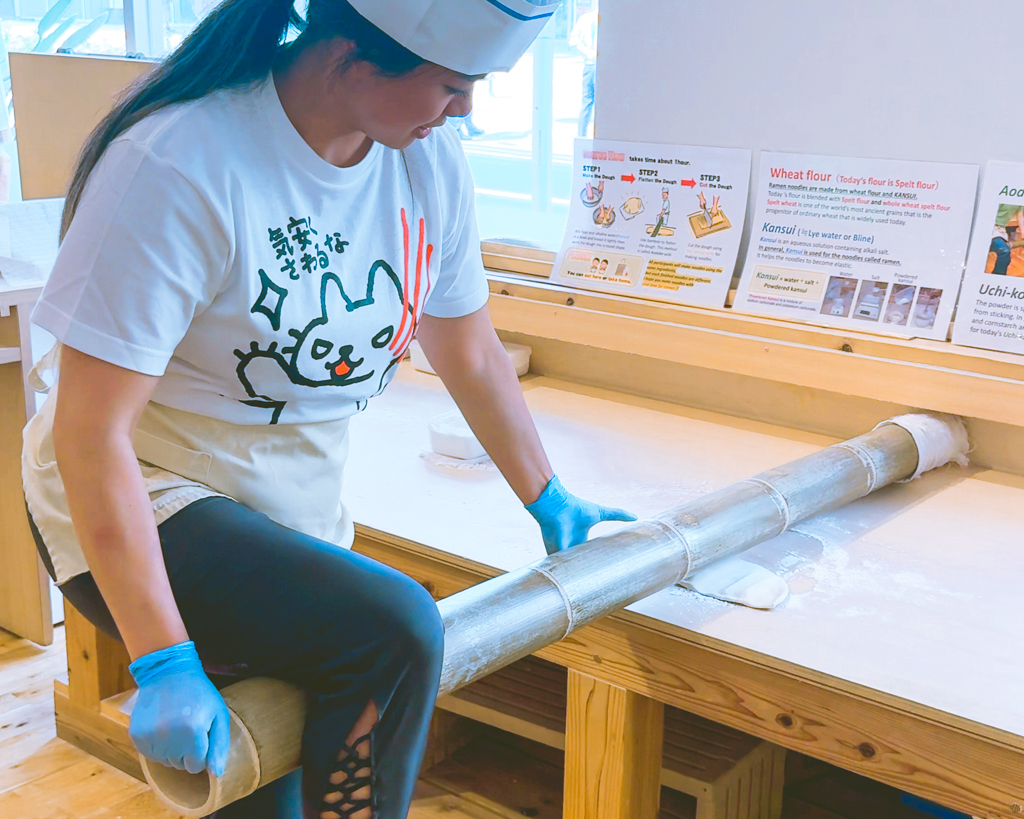
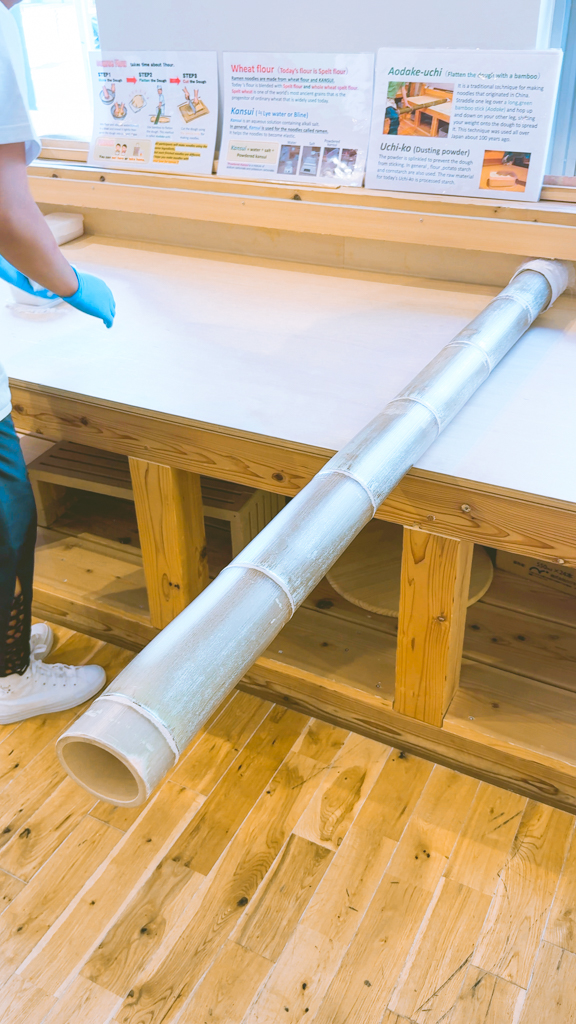
You place one leg over a giant piece of bamboo, press your dough on top, and then bounce up and down with your other leg to flatten and stretch it.
That is what makes it so fun. Think of it as a cross between kneading, dancing, and a leg workout, all rolled into one.
The point of all that hopping is to create ramen noodles with the perfect balance of chew and softness. It takes real skill to master, and some ramen makers spend years perfecting the rhythm.
In this workshop, you get to step right into their shoes, even if just for a day (a couple of hours). The best part is that your slightly wobbly noodle dance still produces chewy, delicious noodles you can proudly call your own.
If this sounds like super fun to you, we’ve also got other fun things to do in/near Tokyo you’ll love reading about.

Getting to the Shin-Yokohama Ramen Museum
You will find this ramen-making experience inside the Shin-Yokohama Ramen Museum, about a five-minute walk from Shin-Yokohama Station. The location makes it an easy add-on to any Tokyo or Yokohama itinerary.
Even if you are not joining the Aodakeuchi class, the museum itself is worth a visit.
It is a ramen lover’s playground with retro ramen stalls, shops, and exhibits where you will learn about noodle’s history.
Come for the workshop, but give yourself time to explore everything else while you are here.

The Aodakeuchi Ramen Making Experience: Step by Step Guide
1. Making the Dough
This is where your ramen-making experience begins.
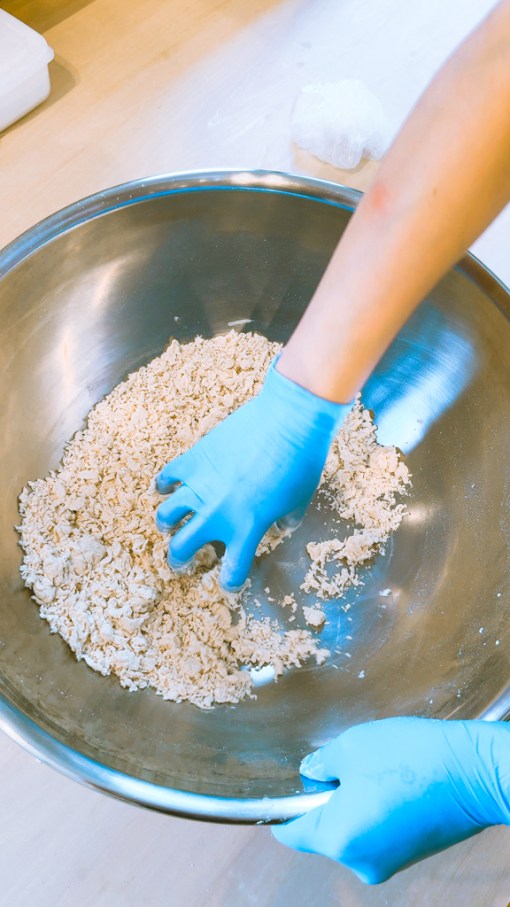
You start by mixing spelt flour with kansui, the alkaline water that gives ramen its signature texture. The moment you begin kneading, you are already in deep.
Hands covered in flour, elbows sinking into the dough, and the quiet determination that you are about to make something real.
After kneading and pressing, the dough gets a short rest. Think of it as the dough gathering its strength, just like you are about to do for the next step.
2. The Bamboo Dance: Flattening the Dough
Here comes the star move of the class: the Aodakeuchi technique.
The instructor demonstrates first, and everyone starts cautiously. You drape one leg over a thick bamboo pole, place your dough on top, and bounce with the other leg to press it flat. The rhythm feels playful at first and then strangely satisfying.
As you hop and press, the dough stretches wider with each movement.
You rotate it, bounce again, and repeat until it becomes a neat circle about 40 centimeters across. It does take a little endurance, but that is exactly what makes it rewarding.
Each hop connects you more to the history and craft of ramen making.

3. Cutting the Dough
With your dough perfectly flattened, it is time to turn it into noodles.
You feed it into a specialized noodle-cutting machine and guide it carefully as it slices the dough into thin, even strands.
The machine is designed to help, so even beginners can create noodles that look as good as they taste.
Each press of the cutter transforms the sheet of dough into long ribbons, and you start to see your work come to life. The best part is knowing these noodles, made entirely by you, are about to become the star of your very own ramen bowl.
4. Eat-In or Take-Out: The Tasty Finale
This is where all your effort pays off.
The batch you make is enough for two bowls. You can eat them right away or bring them home. If you choose to eat in, the staff prepares your noodles in a steaming bowl of soy sauce ramen, complete with broth and toppings.
Every slurp tastes better when you know the noodles came from your own hands.
If you prefer to take them home, your noodles are carefully packed with broth, green onions, chashu pork, menma, and naruto fish cakes.
It is a perfect little kit to recreate the experience later or share it with someone else.


How Much Does the Aodakeuchi Ramen Making Experience Cost?
The Shin-Yokohama Ramen Museum keeps things affordable. Admission is 500 yen for adults and 100 yen for children and seniors. The Aodakeuchi ramen making experience is 4,700 yen per person.
For what you get: a full hands-on class, guidance from instructors, and two servings of noodles you made yourself…it feels more than worth the price. You leave with both a fun memory and a deeper appreciation for ramen.
Reserving Your Ramen-Making Spot
The Aodakeuchi ramen making experience is popular and space is limited, so reservations are musts.
Only four sessions are offered each day, and spots fill up quickly. You can book directly through the museum’s website, by email, or by phone.
Each session lasts about 60 to 90 minutes, giving you plenty of time to learn the process without feeling rushed.
Pro tip: Arrive a little early and leave enough time to explore the rest of the museum. You can browse the ramen gift shop or wander through the museum’s retro-style ramen stalls before your class begins. It makes the whole visit feel even more memorable.


Tips for an Unforgettable Ramen-Making Experience
Here are a few insider tips to make the most of your Aodakeuchi ramen making experience at the Shin-Yokohama Ramen Museum:
Bring some energy: Flattening dough on a bamboo pole is more of a workout than it looks. The effort is part of the fun, and you will appreciate every noodle you make.
Eat in or take out: Whether you enjoy your noodles on the spot or take them home, both options are rewarding. Eating in gives you the instant satisfaction of slurping what you just created, while the take-home kit lets you recreate the experience later.
Vegan options are available: Let the staff know when you book if you are vegan. They can prepare a plant-based broth and toppings so you still get the full experience.
Wear comfortable clothing: You will be moving around and bouncing on bamboo, so choose clothes you can move in. The museum provides paper hats and aprons to keep things clean.
A little Japanese helps: The staff speaks some English, but knowing a few Japanese phrases makes the interaction smoother and more fun. When the instructor realized we could speak a bit of Japanese, their face lit up in a way we will never forget. That moment made the whole experience feel even more personal and special.


Conclusion
The Aodakeuchi ramen making class at the Shin-Yokohama Ramen Museum is more than a cooking workshop.
It is an unforgettable way to step into Japan’s food culture, laugh at yourself a little, and come away with noodles you actually made. From the bamboo dance to that first slurp, the experience is equal parts fun and meaningful.
We left with flour on our clothes, a new appreciation for ramen makers, and memories that still make us smile.
If you are planning a trip to Yokohama or looking for something unique to do near Tokyo, set aside the time for this class. You will walk away with new skills, a deeper connection to Japan’s food culture, and a bowl of ramen that tastes better than any you have had before… because this time, the noodles are yours.
You must be logged in to post a comment.