
Is the JR Pass Worth Buying in 2026? Complete Guide to Japan’s JR Pass
Japan has one of the best public transportation systems in the world, and if you’re planning a trip with multiple cities involved, it’s likely you’ve heard about the JR Pass.
On the surface, it sounds ideal. One pass, unlimited train travel, and easy access between cities across the country. A few years ago, it really was a no-brainer for many itineraries.
We’ve used the JR Pass ourselves back in 2018, when it genuinely helped us save money while traveling between cities. Since then, a major price increase in late 2023 has changed the conversation entirely.
Now, travelers are left wondering whether the JR Pass is still worth buying, when it actually makes sense, and what alternatives might be smarter.
This guide breaks everything down: how the JR Pass works, how much it costs now, when it might still be worth it, and when you’re better off skipping it.
Plan your trip with our favorite resources
Where to Stay in Japan: check best deals
Transport & activities: klook.com (save up to 10% with code DANAYAO)
eSIM for Japan: stay connected with Airalo
What Is the JR Pass?
The JR Pass usually refers to the national Japan Rail Pass, a travel pass designed for foreign visitors to Japan.
It allows unlimited travel on trains operated by the Japan Railways Group for 7, 14, or 21 consecutive days, starting from the day you activate it.
The pass comes in two versions: Standard and Green Car, which is the first-class option. Both cover the same routes, with the main difference being seat comfort.
The JR Pass can be used on most JR trains across Japan, including many Shinkansen bullet trains and local JR lines within cities. However, it does not work on private railways or most subway systems, and the fastest Shinkansen services, Nozomi and Mizuho, require an additional fee.
That’s the basic idea. Whether it’s still worth buying is where things get more complicated, which we’ll break down next.

JR Pass Prices (2026 Update)
If you’ve decided the JR Pass is a good fit for your itinerary, here are the current prices and where to buy it.
| Duration | Adult (Standard) | Child (Standard) | Adult (Green) | Child (Green) | Buy |
|---|---|---|---|---|---|
| 7 days | ¥50,000 / ~$335 | ¥25,000 / ~$170 | ¥70,000 / ~$470 | ¥35,000 / ~$235 | Check availability |
| 14 days | ¥80,000 / ~$540 | ¥40,000 / ~$270 | ¥110,000 / ~$740 | ¥55,000 / ~$370 | Check availability |
| 21 days | ¥100,000 / ~$670 | ¥50,000 / ~$335 | ¥140,000 / ~$940 | ¥70,000 / ~$470 | Check availability |
You’ll notice there’s a big jump between the Standard and Green Car prices. Green Car is first class, with wider seats and a quieter cabin, but it doesn’t change what routes you can use. We’ll talk later about whether that upgrade is actually worth it.
TL;DR: Is the JR Pass Worth It in 2026?
For most travelers, the answer is no.
The JR Pass used to be a solid money-saver, especially before late 2023. We used it ourselves back in 2018, and at the time, we just loved how it made traveling between cities much cheaper and easier.
That changed after the major price increase in October 2023, when costs jumped by nearly 70%. Since then, the math no longer works out the same way. For most common itineraries, buying individual train tickets or using regional JR passes ends up being cheaper than the national JR Pass.
Even the popular Golden Route, traveling from Tokyo to Kyoto, Osaka, Hiroshima, and back to Tokyo, now only barely breaks even with a 7-day JR Pass. And that’s assuming you’re moving quickly and packing a lot of long-distance travel into a short window.
The fastest bullet trains, Nozomi and Mizuho, are technically usable with the JR Pass, but they require an additional fee. That extra cost further reduces the value and is something many travelers don’t realize until they’re already planning.
The JR Pass can still make sense if you’re covering long distances across Japan in a short amount of time and value flexibility over saving every yen. For everyone else, especially travelers moving at a slower pace or staying within one region, there are usually better and more cost-effective options.

What Does the JR Pass Cover?
The coverage is broad, but it’s not all-encompassing. In major cities especially, you’ll still need an IC card or separate tickets for subways and private lines.
The JR Pass does cover
- Most JR train lines across Japan, including many Shinkansen bullet trains
- Limited express, rapid, and local JR trains
- Popular city lines like the Yamanote Line in Tokyo and the Osaka Loop Line in Osaka
- Tokyo Monorail to and from Haneda Airport
- Narita Express from Narita Airport
- Some JR-operated local buses (expressway buses are not included)
- The JR ferry to Miyajima from Hiroshima
The JR Pass does not cover
- Non-JR trains
- Keio buses
- Expressway buses
- Tokyo Metro or other city subway systems
- Private railway lines (such as Odakyu, Keio, or Hankyu)
Important note on Shinkansen
The fastest bullet trains, Nozomi and Mizuho, can be used but require an additional fee, even with a JR Pass.

National vs. Regional JR Passes
When most people think of the JR Pass, they’re thinking of the national JR Pass, which covers travel across the entire country. It’s also the most expensive option, and for many itineraries, that’s exactly why it no longer makes sense.
What often gets overlooked are regional JR passes.
Japan has more than 20 regional JR passes, each designed to cover a specific area for a set number of days. These passes are significantly cheaper than the national JR Pass and can be a much better fit if you’re spending most of your time in one region.
Regional passes are especially useful for travelers who plan to base themselves in one area and take multiple day trips, rather than constantly moving between major cities. The coverage varies by pass, but many include long-distance trains, limited express routes, and even ferry access within that region.
A few common examples include:
Kansai–Hiroshima Pass: covers Kyoto, Osaka, Kobe, Hiroshima, and Miyajima.
JR Kyushu Pass: covers travel within Kyushu, with options for northern, southern, or the entire island.
Hokuriku Arch Pass: which connects Tokyo, Kanazawa, and Kyoto via the Hokuriku region.
While regional pass prices also increased in late 2023, they didn’t jump nearly as dramatically as the national JR Pass. Depending on your route, they can still offer real savings.
This is why, for many travelers, the decision isn’t really “JR Pass or no JR Pass,” but rather national pass vs. regional pass vs. individual tickets. We’ll break that down even further once we start running the numbers.
Discount Code: Use DANAYAO during checkout for up to 10% off!

Should You Buy a JR Pass? Let’s Do the Math
This is where the JR Pass either makes sense or doesn’t.
To keep things realistic, we looked at several common itineraries and compared the cost of buying individual train tickets versus the total cost to the 1-week JR Pass (¥50,000), the 2-week JR Pass (¥80,000), and the 3-week JR Pass (¥100,000).
The goal here isn’t to find the one perfect route where the pass barely works, but to see how it performs across trips people actually take.
Tokyo → Kyoto → Nara → Osaka → Tokyo = ¥30,420
This is one of the most popular first-time Japan routes. Even if you complete this trip within a week, the total cost of individual tickets is still far less than a 7-day JR Pass. In this case, buying separate tickets is cheaper.
Tokyo → Nikko → Takayama → Shin-Fuji → Tokyo = ¥43,140
This itinerary covers a mix of nearby trips and longer rides, including mountain areas and Mt. Fuji views. Even with multiple long-distance trains, the total still comes in under the cost of a 7-day JR Pass. Again, individual tickets make more sense here.
Tokyo → Nagano → Kanazawa → Niigata → Tokyo = ¥47,760
This route gets close to breaking even. While the total cost is only slightly lower than a 7-day JR Pass, it’s still cheaper to buy individual tickets. Unless you highly value the flexibility of a pass, the savings just aren’t there.
Tokyo → Akita → Aomori → Sapporo → Sendai → Tokyo = ¥72,610
This is one of the few cases where the JR Pass can start to make sense. If you move quickly and complete this route within seven days, the 7-day JR Pass may save you money. If you slow the trip down to two weeks, however, individual tickets are still cheaper than a 14-day pass.
Tokyo → Sapporo → Sendai → Shin-Fuji → Kyoto → Osaka → Hakata → Kagoshima → Tokyo = ¥86,220
This is a very fast-paced, long-distance itinerary that covers much of the country. If you complete it within two weeks, the 14-day JR Pass can be worth it. But if you stretch this trip out, the cost advantage disappears quickly.

So, When Is the JR Pass Actually Worth It?
If you’re covering long distances across Japan in a very short amount of time, changing cities frequently, and value flexibility over saving every yen, the pass can still work in your favor. These trips tend to be fast-paced and very tightly scheduled.
For everyone else, individual Shinkansen tickets or regional JR passes are usually the better choice. They offer more control, often cost less, and better match how most people actually travel.
The key takeaway is that the JR Pass is no longer a default purchase. It’s a tool that only works when your itinerary is built around it, not the other way around.
Always use a JR Pass calculator to see if the JR Pass would be worth it for your specific itinerary.
Best Alternatives to the JR Pass
If the national JR Pass doesn’t make sense for your itinerary, you’re not stuck. In fact, most travelers end up saving more money by mixing and matching alternatives instead of committing to one pass.
Individual Shinkansen Tickets
For many trips, buying individual Shinkansen tickets is the simplest and most cost-effective option.
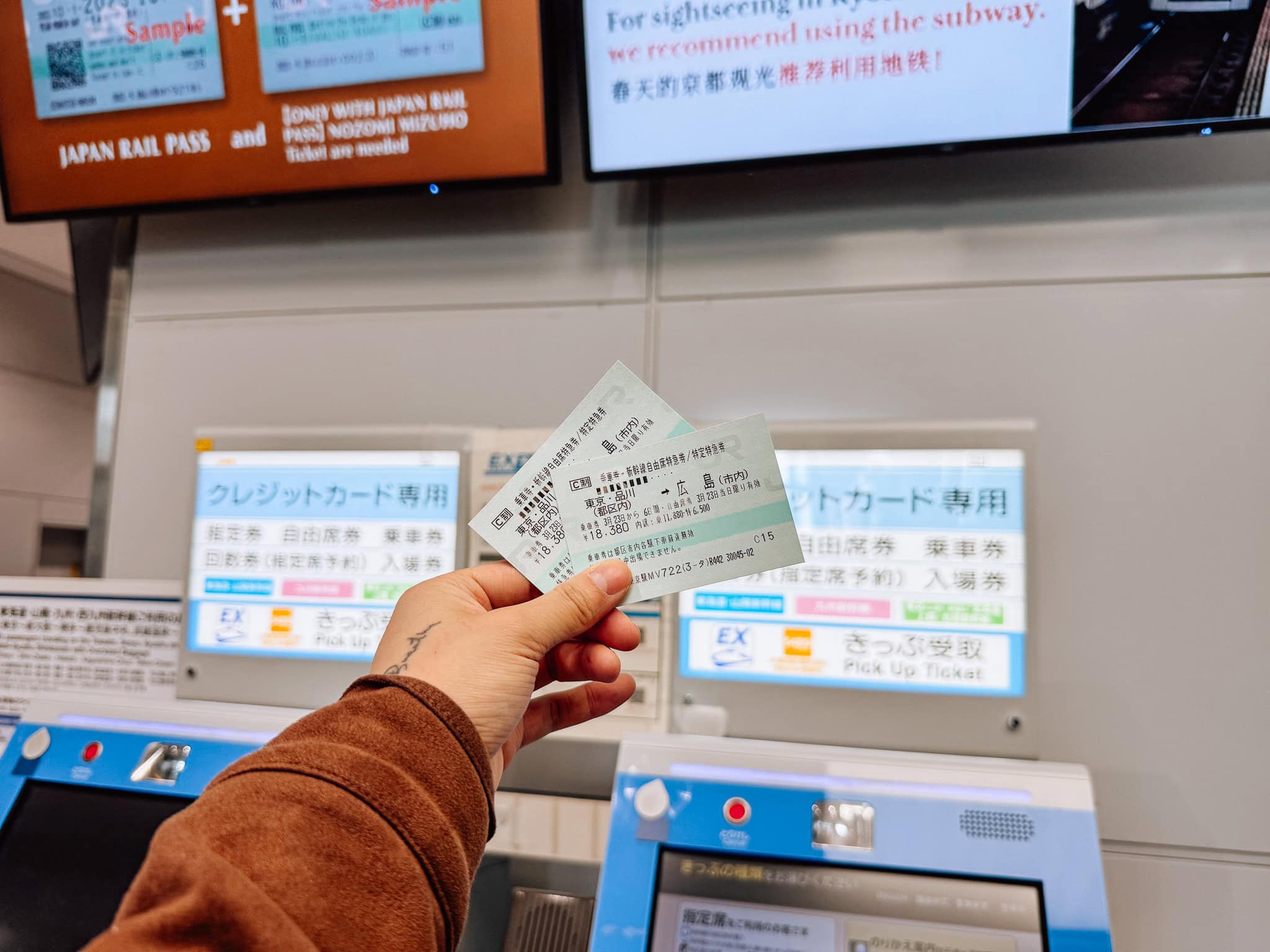
You can purchase tickets on the day of travel at the station, and the ticket machines are easy to use with full English support. If you prefer speaking to someone, the JR ticket offices at major stations can help you choose the right train and seat.
You can also pre-book tickets online, which can be helpful during busy seasons like cherry blossom season or Golden Week. For most routes, though, booking in advance isn’t required.
Discount Code: Use DANAYAO during checkout for up to 10% off!

Regional JR Passes
Regional JR passes are often the sweet spot.
These passes cover a specific area of Japan rather than the entire country and are much cheaper than the national JR Pass. They work especially well if you’re based in one region and planning multiple day trips or short hops between nearby cities.
Examples include passes that cover the Kansai area, Kyushu, or routes connecting a few neighboring regions. Even though prices increased in late 2023, regional passes can still offer real savings depending on your route.
Highway and Overnight Buses
Long-distance buses are another budget-friendly alternative, especially if you’re flexible with time.
Highway buses connect major cities across Japan and are often significantly cheaper than the Shinkansen. Some companies offer multi-day passes for foreign travelers, making it possible to cover several routes at a lower cost.
The trade-off is travel time, but for overnight routes, you can save on a night of accommodation as well.
Domestic Flights
For very long distances, flying can sometimes be cheaper than taking the train.
Routes like Tokyo to Kyushu or Tokyo to Hokkaido are good examples where domestic flights may cost less than Shinkansen tickets, especially if booked in advance. While trains are generally more convenient and environmentally friendly, flights can make sense when distances get large.
If You Decide the JR Pass Is Worth It: Logistics You Should Know
If, after running the numbers, the national JR Pass still makes sense for your itinerary, here’s how to buy it and use it without overthinking the process.
When to Buy the JR Pass
It’s best to buy the JR Pass at least 2 weeks before your trip (~ 1 month just to be safe). This gives you a buffer in case of shipping delays or issues with your order.
Once purchased, the exchange order is valid for up to 90 days from the issue date, depending on where you buy it. This means you don’t need to activate it right away, and you can time the start of the pass to line up with your long-distance travel days.
Where to Buy the JR Pass
You can buy the JR Pass online through the official JR Pass website or authorized resellers like Klook. Prices are generally similar, but some resellers offer better flexibility, such as a longer exchange window.
You’ll choose between Standard and Green Car at purchase. Green Car is the first-class option, with wider seats, quieter cabins, and a bit more space. It’s more comfortable, but it doesn’t change what routes you can use.
To pick up and activate your pass, you’ll need your passport and your exchange order. JR Travel Service Centers are available at major train stations and airports, and picking it up at the airport is usually the most convenient option.
Discount Code: Use DANAYAO during checkout for up to 10% off!
How to Activate and Use the JR Pass
Activating the JR Pass is straightforward.
First, take your exchange order and passport to a JR Exchange Office. You’ll fill out a short form and choose the date you want the pass to start. The start date must be within 30 days of activation, but it doesn’t have to be the same day you pick it up.
Once activated, you’ll receive the physical JR Pass. To use it, simply insert it into the automatic ticket gates at JR stations and collect it on the other side, just like a regular ticket.
Seat reservations can be made for free at JR ticket offices if you want them, but they’re not required for every train.

JR Pass FAQs
Is it better to buy the JR Pass or individual tickets?
For most travelers, individual tickets are cheaper. Unless you’re covering very long distances in a short time, buying tickets as you go or using regional passes usually saves money.
Can I use the JR Pass on subways in Tokyo or Osaka?
No. The JR Pass does not cover subway systems like Tokyo Metro or Osaka Metro. It only works on JR-operated lines, so you’ll still need an IC card or separate tickets in cities.
Do I need to reserve seats if I have a JR Pass?
Seat reservations are optional and free with the JR Pass. You can ride non-reserved cars without a reservation, but reserving seats is helpful during busy travel periods.
Is the JR Pass refundable?
Most JR passes can be refunded if they haven’t been activated, but there is usually a cancellation fee. Refund policies depend on where you buy the pass, so always check before purchasing.
Can I share or transfer my JR Pass?
No. The JR Pass is non-transferable and can only be used by the person whose name is on the pass.
Does the JR Pass cover luggage reservations on the Shinkansen?
The pass covers the train ride itself, but oversized luggage rules still apply. If you’re bringing large luggage, you may need to reserve a seat with luggage space or use luggage forwarding services.
Conclusion
The JR Pass used to be an easy yes. In 2026, it’s no longer that simple.
For most travelers, the national JR Pass is no longer the most cost-effective option. The price increase means that many common itineraries don’t come close to breaking even, especially if you’re traveling at a relaxed pace or spending time within one region.
That doesn’t mean the JR Pass is useless. It can still make sense for super fast-paced trips covering long distances across Japan in a short amount of time. But it’s now a tool that only works when your itinerary is built specifically around it.
For everyone else, individual Shinkansen tickets, regional JR passes, buses, or even domestic flights are often better choices. The key is to plan your route first, then choose the transportation option that actually fits how you’re traveling.
If there’s one takeaway, it’s this: don’t buy the JR Pass by default. Do the math, look at your itinerary honestly, and choose what works best for your trip.
You must be logged in to post a comment.