
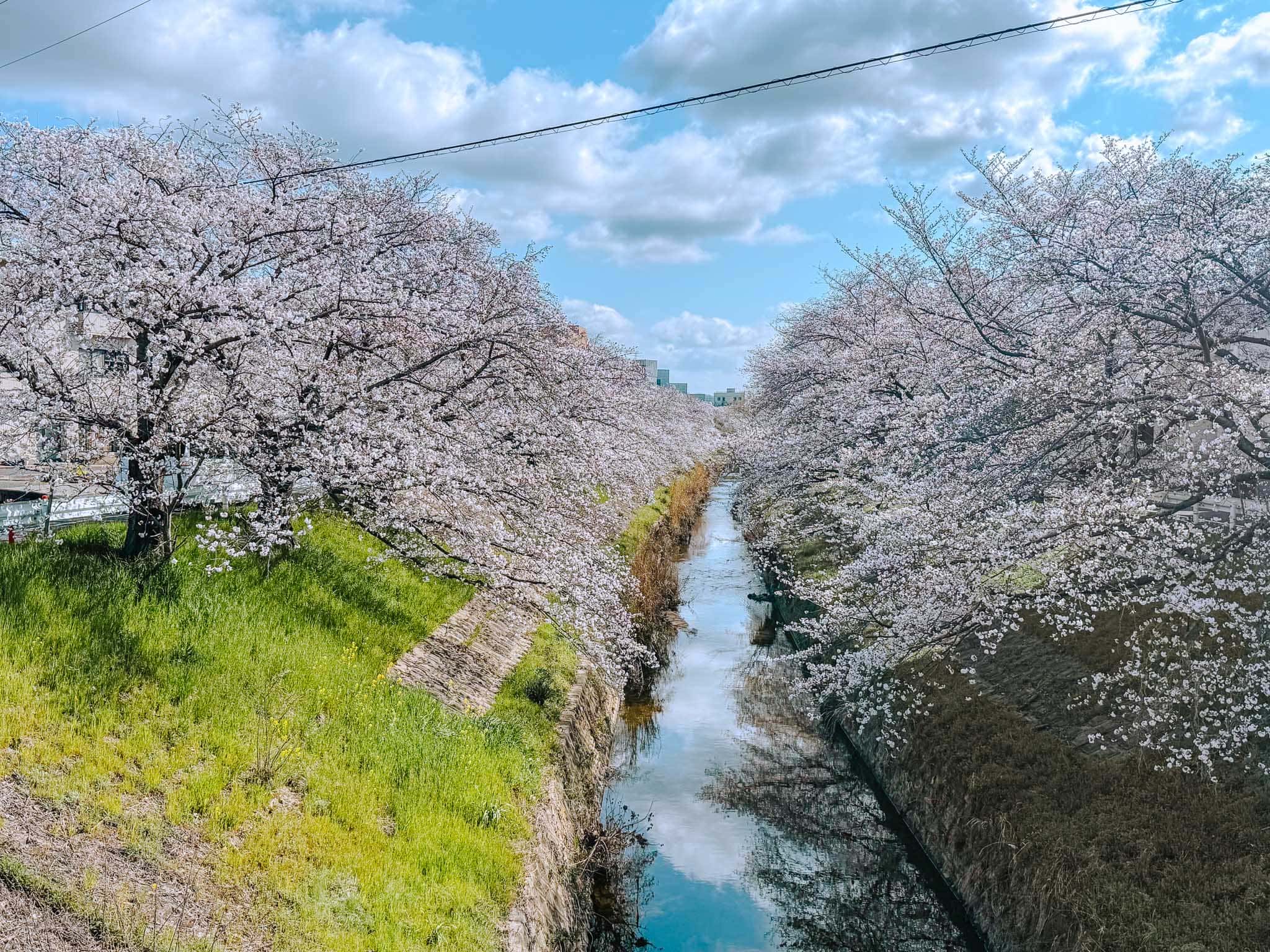
How Accurate Is Japan’s Cherry Blossom Forecast? What Travelers Should Know
Cherry blossoms in Japan are beautiful, but the season is short and varies slightly every year. If you’re planning a spring trip, that’s where the stress usually starts.
Japan’s cherry blossom forecast also starts showing up early in winter, then keeps updating as the season gets closer. You’ve probably already seen a dozen versions of it, but it’s hard to know how to use that info when you’re actively booking flights and hotels.
We’ve been there too. We planned a full trip around sakura in 2024, followed the forecast closely, and still missed it. The bloom came way later than expected, and we spent way too many days staring at trees that were not ready.
So this post is here to help you interpret the Japan cherry blossom forecast with practical tips, so you have a better shot at actually seeing cherry blossoms. I’ll break down what the forecast predicts, why it changes, how accurate it tends to be, and how to plan a sakura trip that still feels worth it even if the dates shift.
Plan your trip with our favorite resources
Where to Stay in Japan: check best deals
Transport & activities: klook.com (save up to 10% with code DANAYAO)
eSIM for Japan: stay connected with Airalo
Cherry Blossom Forecast Japan at a Glance
What it is: A seasonal prediction of when cherry blossoms (sakura) are expected to bloom across Japan.
What it predicts: It usually lists first bloom and full bloom dates for major cities and regions.
First bloom: The day the first flowers open.
Full bloom: When about 70 to 80% of the blossoms are open, which is the peak “pink everywhere” look most travelers want.
Why it changes: Sakura timing is temperature-dependent, so warm weather can push blooms earlier and faster, while cold weather can delay and slow everything down.
How to use it: Treat forecast dates as estimates and plan around a range. The closer you get to your trip, the forecast usually tightens up and becomes more useful.
Real-life example: We’ve seen big differences year to year in the same cities. Tokyo and Kyoto were much colder in 2024, so the bloom was delayed. In 2025, it was noticeably warmer and they bloomed earlier and faster.
Quick planning checklist:
- Check the forecast for the 2 to 3 cities you’re actually visiting, focusing on full bloom and the days around it.
- Give yourself a viewing window, not one single “perfect” day.
- Keep one backup plan in mind, either an earlier-bloom area (south) or a later-bloom area (north), depending on your route.

What Is the Cherry Blossom Forecast in Japan?
Cherry blossom season is a big deal in Japan, so the forecast is basically a seasonal version of a weather forecast, but for sakura. It predicts when blossoms are expected to start opening and when they’re likely to reach full bloom in different parts of the country.
Who publishes the cherry blossom forecast?
You’ll see these forecasts published by a mix of sources. Some come from meteorological or weather-related organizations, and others are shared by media outlets, travel platforms, and tour groups using weather data.
The format varies, but they’re all estimating bloom timing based on weather patterns and past bloom records.
What “forecast” actually means
In this context, a forecast is a best estimate based on what the weather data looks like right now. That’s why the dates can shift, especially early in the season when spring temperatures are still uncertain.
Why Japan tracks sakura so closely
Japan tracks cherry blossoms closely because the timing matters in real life, not just photos. Hanami (cherry blossom viewing) is a major seasonal tradition, spring is one of the busiest tourism periods of the year, and the peak window is short. In many places, full bloom only lasts a handful of days before petals start falling.
What these forecasts look like
Most forecasts show up as maps and city-by-city tables. The maps are helpful for seeing how the bloom moves north over time, and the tables are useful when you’re planning specific stops like Tokyo, Kyoto, or Osaka.
Tip: Want the classic sakura + Mt. Fuji view? Save up to 10% with code DANAYAO on Klook bookings.
How often the forecast updates
They update a lot. Early versions can start appearing in winter, usually as scheduled releases, then the updates get more frequent as spring gets closer.
By March, many forecasts tighten quickly and may update very often, so it’s worth checking regularly if you’re planning around peak bloom.

How the Cherry Blossom Forecast Is Calculated
Cherry blossom forecasts look simple on the surface, but they’re mostly built from two inputs: temperature patterns and historical bloom data. Then the dates keep tightening as new weather information comes in.
Temperature patterns
Sakura timing is heavily affected by how warm or cold late winter and early spring are, especially across February, March, and early April.
If it warms up early, buds develop faster and blooms can arrive earlier and move quickly. If it stays cooler, bud development slows and bloom dates get pushed back.
This is exactly what we saw year to year. 2024 stayed colder and the bloom was delayed, while 2025 was much warmer and the season moved earlier and faster.
Historical bloom data
Forecasts also rely on past bloom records for each city. That creates a baseline for what’s “normal” in places like Tokyo, Kyoto, or Osaka.
Then they compare the current year to similar past years and adjust from there, which is why you’ll see different cities shift by different amounts.
Benchmark “sample trees” and how bloom is declared
A lot of Japan’s official sakura tracking comes from benchmark “sample trees” in each forecast area, and they’re usually Somei Yoshino since that’s the most common variety in big cities.
When you see TV channels talking about the “cherry blossom front,” they’re often referencing these observation trees and the official status updates tied to them.
For the standard definitions used in forecasting, first bloom is declared when about 5 to 6 blossoms open on the sample tree. Full bloom is when 80% or more of the blossoms on that same tree are open.
It’s a simple system, but it explains why dates can shift quickly in late March and early April: once the observation trees start moving, the forecast updates get more confident and more frequent.
Why the forecast keeps changing
As spring gets closer, the inputs get clearer. The early forecast is more like a starting estimate, then later updates react to what’s actually happening in the current season.
That’s why the dates can feel jumpy in winter, then tighten up closer to bloom season.
Tip: Want the classic sakura + Mt. Fuji view? Save up to 10% with code DANAYAO on Klook bookings.

How Accurate Is the Cherry Blossom Forecast?
The Japan cherry blossom forecast is useful, but it’s not exact. It can be pretty close in the weeks leading up to bloom, but early predictions can still shift by several days, and sometimes more.
Early forecasts vs. late forecasts
Early forecasts (the ones you see in winter) are based on averages and long-term patterns, so the window can move a lot once the real spring weather starts playing out.
Later forecasts, especially in March and early April, tend to be much more reliable because they’re based on what’s happening in the current season and the dates usually tighten up.
Why “accurate” doesn’t mean guaranteed
Even if the forecast is close, sudden temperature swings can still change everything. A warm stretch can speed things up fast, and a cold spell can slow bud development and delay peak bloom.
That’s why it’s normal to see dates adjust right up until the season begins.
What travelers should realistically expect
Treat the forecast as a general window, not a single day you have to hit perfectly.
The easiest way to think about it is like a weather forecast. Far ahead of time, it’s more of a best guess. Closer to the date, it becomes more useful.
The difference is the stakes. With weather, being wrong might mean the wrong jacket. With cherry blossoms, being off by a few days can matter a lot more if your whole trip is built around sakura.
That’s why it helps to plan around a range instead of building your entire itinerary around one “perfect” date.
Our experience navigating the cherry blossom forecast
In 2024, we planned our trip around the forecast and still missed peak bloom. It stayed cold the entire time we were there, and the trees just never opened the way we expected. We kept showing up to the “famous” spots and seeing mostly bare branches, and we were definitely not the only ones.
What we learned is that the forecast helps you plan a window, not lock in a day.
Now we plan with more flexibility and assume the bloom can shift by a week in either direction, especially if the weather is trending colder or warmer than usual.


What the Cherry Blossom Forecast Does NOT Tell You
Even the best forecast has limits. It’s helpful for timing, but it can’t tell you exactly what your experience will look like in every spot you visit.
It can’t promise peak bloom everywhere
The forecast is usually based on a general bloom timeline for a city, but cherry blossoms don’t all peak at the same time. Some areas will look amazing while others nearby are still early, already past peak, or just not as full.
It doesn’t account for microclimates
Small differences in elevation, wind, sun exposure, or even how built-up an area is can change bloom timing. That’s why two neighborhoods in the same city can look noticeably different, even on the same day.
It doesn’t guarantee the weather during your visit
A forecast can tell you when blossoms are likely to open, but it can’t control what your actual viewing day will be like. Rain, strong wind, or a sudden cold snap can change how long the petals last or what the trees look like when you arrive.
Why social media dates oversimplify reality
A lot of “best dates” posts are based on one city, one year, or one famous photo spot.
They make it sound like sakura happens on a single perfect week across all of Japan, when in reality it moves over time and looks different depending on where you are.
We post on social media too, and we’re sharing the best moments we caught that day, not every tree that was still bare.
Tip: Want the classic sakura + Mt. Fuji view? Save up to 10% with code DANAYAO on Klook bookings.

How to Actually Read the Cherry Blossom Forecast
Cherry blossom forecasts look straightforward, but they’re easy to misread if you treat them like fixed travel dates. The key is knowing what the labels actually mean and how to think in windows, not exact days.
First bloom vs. full bloom vs. sakura fubuki
Most forecasts list 2 main dates, but you’ll sometimes see a 3rd term that matters for travelers too.
First bloom is when the first flowers open. It’s the start of the season, but it usually won’t look “fully pink” yet.
Full bloom is when about 70 to 80% of blossoms are open. This is the peak look most people want, but it’s also short. In many places, full bloom is typically reached about a week after first bloom.
Sakura fubuki (literally “cherry blossom snowstorm”) is when petals start falling in big waves, especially on windy days. It usually happens right after full bloom, and you’ll see petals drifting through the air and collecting on the ground like pink confetti. This is one of my favorite moments of the whole season!
Why date ranges matter more than single dates
If a forecast shows a 3 to 5 day range, that’s not a mistake. It’s basically the forecast telling you “this is the likely peak window.”
Planning around one exact day is what creates stress. If you only give yourself one shot and the bloom is early or late, it’s easy to feel like you missed the whole season.
City forecasts vs. regional patterns
Forecasts are usually shown by city, but it helps to think regionally.
Nearby cities can still be a few days apart, and even within the same prefecture, timing can vary. More broadly, the bloom moves north over time.
Southern regions bloom earlier, while northern regions bloom later. For example, Kyushu often blooms earlier in spring, while Hokkaido tends to be much later, often around late April into May.

What the Cherry Blossom Forecast Means for Your Trip Planning
Now you know there’s some uncertainty in the forecasted dates, and that there are different stages of cherry blossoms you might see within the overall sakura window. The next question is what that actually means for your trip planning.
To make this easier, I’ve broken it down into a few common situations below so you can jump straight to the one that fits your travel dates.
If your travel dates are fixed
If your travel dates are fixed, the biggest thing is mindset.
You don’t always need to hit full bloom for the trip to feel worth it. First bloom is exciting, full bloom is the classic look, and a few days after full bloom can be just as pretty. Sakura fubuki, when petals start falling like confetti, is one of the best parts of the season.
The other thing to remember is that cherry blossoms don’t bloom at the same time across Japan. So even if your dates are locked, your plan can still have some flexibility in where you go.
If you’re so determined to catch full bloom, it helps to keep locations a little open. Southern areas tend to bloom earlier than Tokyo, and northern areas bloom later, so you can sometimes adjust your route even if your flights don’t change.

If you’re traveling near the edge of the main season, shoulder-season planning helps too. There are early-bloom spots you can build into your itinerary, like areas around Atami or the Izu Peninsula, where blossoms can show up earlier than the major city parks.
And if you show up and it’s still too early, like what happened to us in 2024, don’t force your entire trip to revolve around bare trees. I know it’s not the same, but this is when it helps to lean into other spring seasonal experiences, like sakura-themed sweets, limited-time menus, or seasonal afternoon tea sets, so the trip still feels like sakura season even if the trees are taking their time.
If your travel dates are flexible
If your dates are flexible, the forecast is most useful as a planning guide, not a final answer.
Use it to pick a general window and build your trip around that, but expect the dates to shift as the season gets closer. Most of the time, you won’t know the “best” timing until you’re within about a week or so of the bloom.
Flexibility also gives you more control over regions. If you want the classic peak season experience, a lot of Honshu lines up around April. If you want a later option that still feels like cherry blossom season without the same intensity, northern areas like Hokkaido tend to bloom later, often into late April or May.
If you’re visiting multiple regions
If you’re visiting multiple regions, this is where the forecast becomes a real planning tool. Sakura moves north over time, so pacing matters.
In general, southern areas bloom earlier and northern areas bloom later. If your route covers more than one region, it can make sense to start farther south and work your way north, so you’re following the season instead of accidentally outrunning it.

When to Book Flights and Hotels Based on the Forecast
Cherry blossom season is one of the busiest travel periods of the year, so waiting for “perfect” forecast certainty usually backfires. Prices start rising really early, and popular hotels can fill months in advance.
What matters more than nailing the exact dates is booking smart. If you’re booking early, prioritize hotels with flexible cancellation. That way you can lock in the location and price now, and still have options if you later decide to shift your itinerary by a few days.
This is also how we plan it.
We book earlier than the forecast feels comfortable, but we build in flexibility where we can. If we’re a little early, we enjoy first bloom and the seasonal atmosphere. If we’re a little late, we focus on areas that are still hanging on or move regions if it makes sense.
What to do once you’re in Japan
Once you’re in Japan, stop obsessing over the national map and check city-level updates for where you are staying that week. When spots start hitting first bloom, full bloom often follows quickly, so that’s when you want to prioritize parks you care about most. If you’re traveling between cities, use the forecast to decide where you should spend your “prime” viewing day, not every day.
Cherry Blossom Forecast Japan FAQs
How often is the cherry blossom forecast updated?
Most forecasts start appearing in winter, then update more often as spring gets closer. By March, updates can happen very frequently, and you may even see daily updates as bloom season approaches.
Is the forecast the same every year?
No. The general bloom window is similar year to year, but the exact timing shifts depending on how warm or cold late winter and early spring are.
What’s the difference between “blooming” and “peak” viewing?
“Blooming” usually refers to first bloom, when the first flowers open. “Peak” viewing typically refers to full bloom, when most of the blossoms are open and the trees look fully pink.

How long does full bloom usually last?
Full bloom is short. In many places, the peak look can last only a few days, and in good conditions it can stretch closer to about a week. Wind and rain can shorten it fast.
Does the forecast apply to all of Japan?
Most forecasts cover the full country, but you should focus on the cities and regions that match your actual itinerary. Bloom timing can vary a lot across Japan, especially between southern areas and northern regions like Hokkaido.
Conclusion
Cherry blossom forecasts are helpful, but the best trips come from planning with a little breathing room.
If you can, think in ranges instead of one perfect day, and don’t make full bloom the only “success” version of your trip. First bloom is exciting, full bloom is the classic peak look, and sakura fubuki, when the petals start falling like confetti, can be just as memorable.
And if the timing still doesn’t line up the way you hoped, it doesn’t mean the season is wasted. Spring in Japan still feels like spring. You’ll see seasonal sweets, limited-time menus, and sakura-themed events all over the place, even when the trees are taking their time.
If you’re planning a spring itinerary, check out our related guides below for cherry blossom spots, seasonal experiences, and city itineraries that work well during sakura season.
You must be logged in to post a comment.