

Where to Stay Near Mt. Fuji: 4 Best Areas, View Hotels and Ryokans We’d Book Again
Mount Fuji is stunning from any angle, and staying overnight lets you see what most day-trip travelers miss: clear mornings, very few crowds, and that postcard-perfect view without the rush.
We started like everyone else, with day trips. After a handful of them we realized that if we wanted to see more and go deeper, staying overnight was the way to go. So that’s what we did.
We’ve spent nights all around the mountain, and everything below comes from those stays: our personal favorite area, plus hotel picks for every budget and travel style.
Our Favorite Mt. Fuji Stay
📍Hotel New Century (Best Value + View Pick)
We loved staying here ourselves (honest review here): friendly service, a spot right on Lake Kawaguchiko, and Mt. Fuji straight out the window.
At about $200 a night, it’s the best value on the lake.

Mt. Fuji view from our room!
Best Places to Stay Near Mt. Fuji at a Glance
Within this guide, there’s something for every travel style, from scenic hot spring escapes to convenient budget stays or even if you want to stay on top of the mountain. But if you asked us to choose just one for each area, these would be the picks.
| Area | Best For | Our picks |
| Kawaguchiko | Unobstructed lake and Mt. Fuji views; close to major Mt. Fuji view points | 📍Fufu Kawaguchiko ($$$$$) 📍Hotel New Century ($$) |
| Yamanakako | Tranquility with lake Mt. Fuji views and fewer crowds | 📍Hotel Kaneyamaen ($$$) |
| Hakone | Onsen town with lots to do: black onsen eggs, cruises, and art museums | 📍Matsuzakaya Honten ($$$) |
| Shin Fuji Area | Budget-friendly, accessible by train, with hidden gem Mt. Fuji views if you’re driving | 📍Hotel Route Inn Shinfuji Ekiminami ($) |
Planning the activities near Mt. Fuji? Places like Ropeway and Fuji-Q tickets are on Klook, and code DANAYAO saves you up to 10%.
One Thing You Absolutely Need to Know: When to Book
Compared to hotels in the rest of Japan, Mt. Fuji hotels get booked up fast.
The popular in-room onsen stays with direct mountain views like Ubuya and Fufu? Those are booked out 4 to 6 months in advance.
For the other hotels, we recommend booking 2 to 3 months ahead. We booked our Hotel New Century room about 2.5 months out and felt lucky we did: when we checked back later, it was completely booked.
You might get lucky and find one off-season, but booking last minute could mean you pay more, or that only the rooms without the view are left.
One more thing to plan around: the mountain itself. Mt. Fuji hides behind clouds more often than you’d think, so even a perfect room doesn’t guarantee the view.
Booking early locks in the room, and our Mt. Fuji Visibility Guide helps you pick the months and times when the mountain actually shows up.
Best Ryokans Near Mt. Fuji with Direct Mountain Views
The best way to do an overnight near Mt. Fuji is a traditional-style ryokan… the tatami rooms, the fresh seasonal Japanese cuisine, and of course that in-room onsen bath with the mountain view right outside your window. This is THE experience you really want.
📍 Ubuya ($$$$$): arguably the ryokan everyone dreams about, and for good reason: lakefront, private open-air onsen, and unobstructed Fuji views right from your room
📍 Hotel Kaneyamaen ($$$): grand kaiseki dinners and a private onsen experience in Yamanakako
📍 Mt. Fuji View and Private Sauna Ryokan Shizuku ($$$$): private open-air bath plus your own sauna
Iconic Mt. Fuji Spots Tour
Up to 10% off with code DANAYAO
Duration: Full day
Highlights: Arakurayama Sengen Park, Hikawa Clock Shop, Oshino Hakkai, Instagram-famous Lawson convenience store, Oishi Park
Included: Bilingual guide; small group or private tour available
Rating: 4.8 stars (check the 33,000+ reviews here)
Cancellation: Free up to 24 hours before

Mt. Fuji viewpoint near at Kawaguchiko
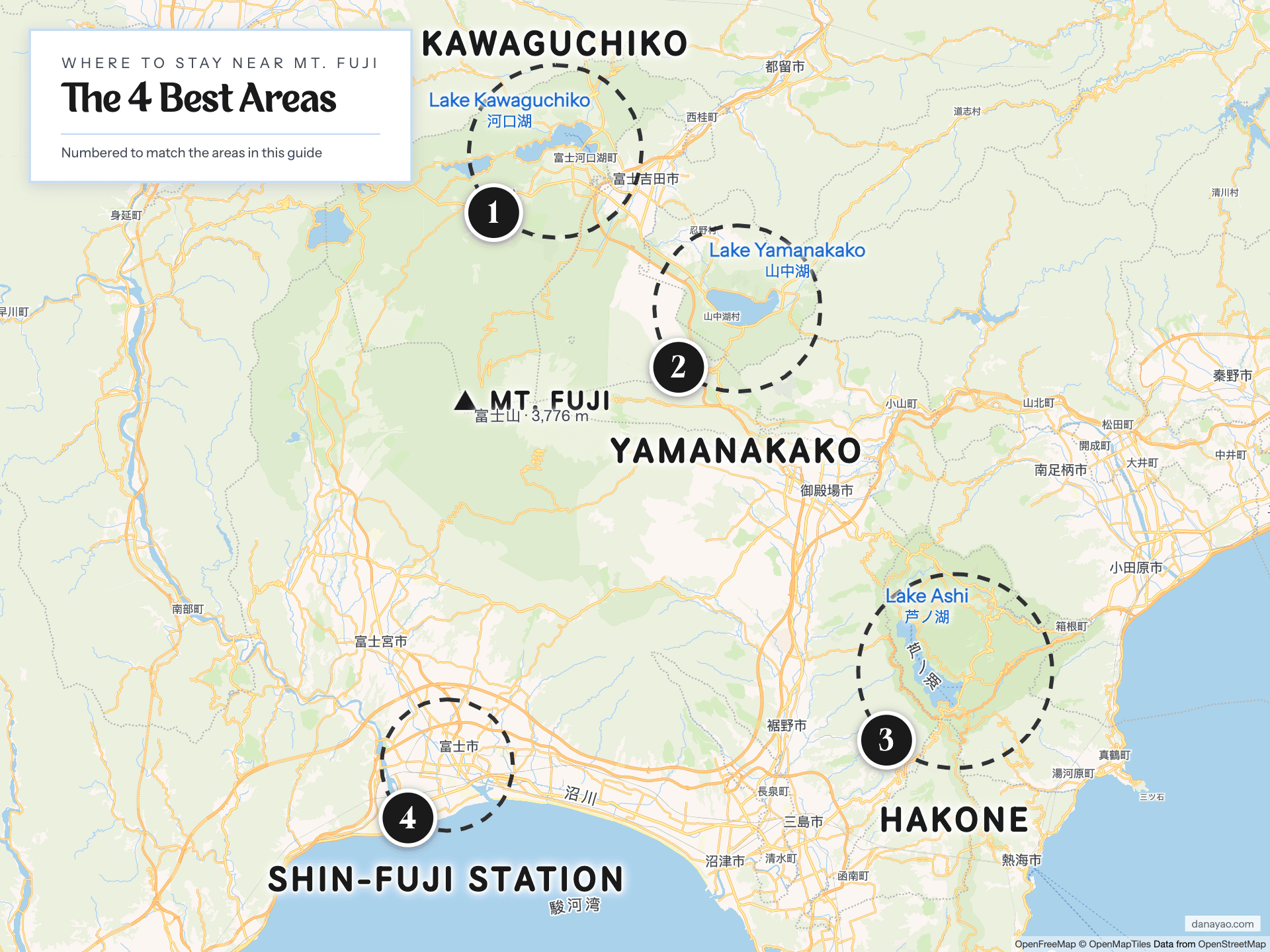
4 Best Areas to Stay Near Mt. Fuji
The best town to stay in for Mount Fuji really depends on the trip you’re planning. But after living in Tokyo and visiting Mt. Fuji more times than we can count, these are the areas we keep coming back to.
Kawaguchiko is hands down our top pick if you want that iconic view of Mt. Fuji across the lake, everything close by, and hotels from budget stays to full-on splurges.
It’s also a short drive to quieter spots like Yamanakako, which makes the visit super doable. If you’re driving, parking is generally easy depending on the hotel.
That said, the right base comes down to your pace, your budget, and which Fuji view you’re after. Here are the 4 areas we recommend, each for a different kind of trip:
- Kawaguchiko Area: Best for classic Mt. Fuji views, convenience, and having the most to do
- Yamanakako Area: Best for peaceful lakeside Fuji views, swans, and quiet
- Hakone Area: Best for hot springs, art museums, lake cruises, and that onsen town feel
- Shin-Fuji Station Area: Best for hidden gem views, cheaper stays, and train access.
Area 1: Kawaguchiko Area
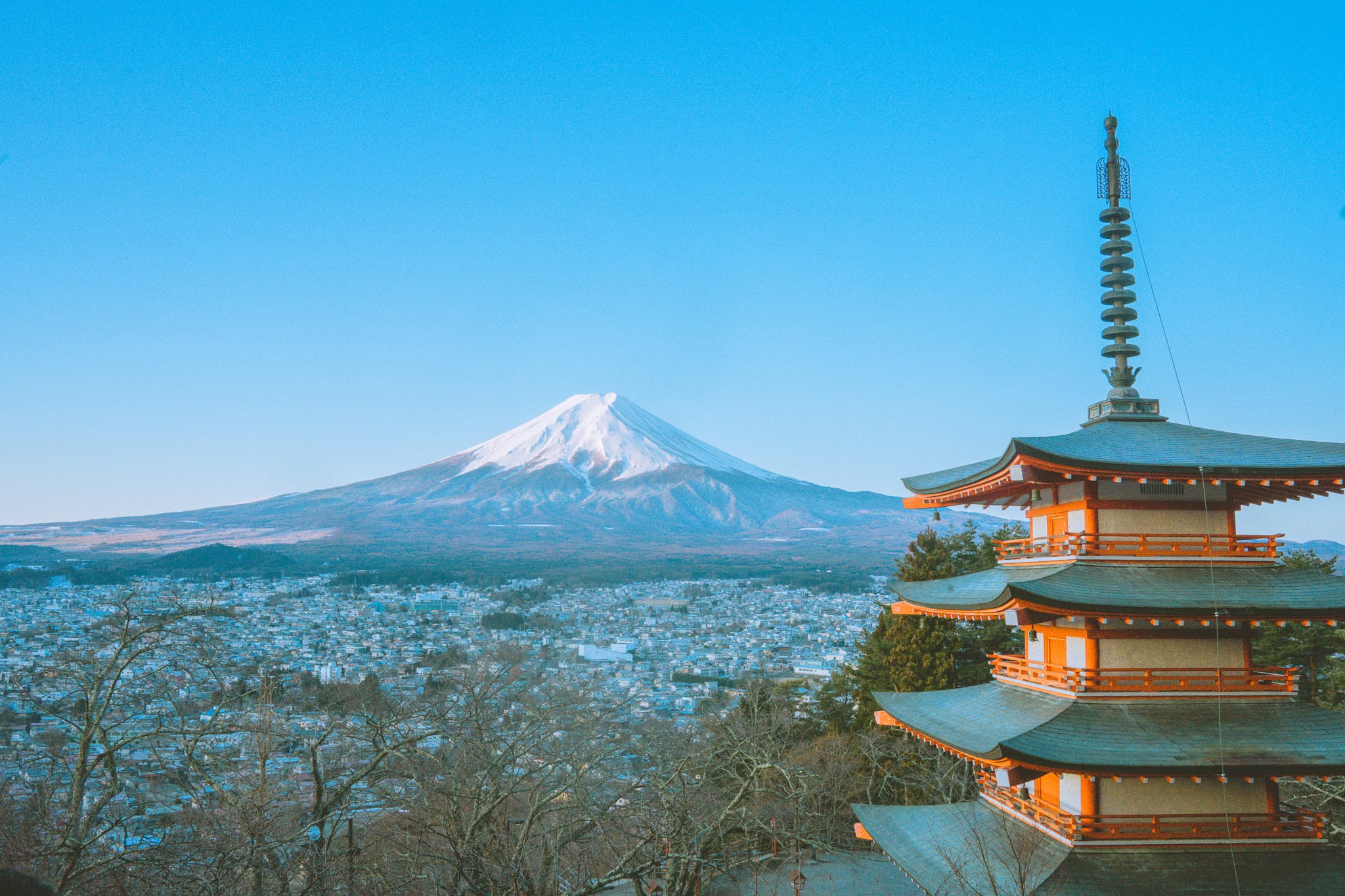
Kawaguchiko is the most popular area to stay for seeing Mt. Fuji, and for good reason. This is where the classic postcard views live: Mt. Fuji right behind Chureito Pagoda, mirrored across the lake on a still morning, or framed by whatever’s blooming that season in the lakeside parks.
It’s also home to the Mt. Fuji Panoramic Ropeway and Fuji-Q Highland, so there’s plenty to do when you’re not just in for the views.
Pros
If your goal is to actually see Mt. Fuji clearly throughout your stay, this is the place to be. Everything is close by: Kawaguchiko Station, Fuji-Q Highland, Arakurayama Sengen Park, and the town of Fujiyoshida.
There are hotels at every price point here, plus walking trails, small shops, and cafes, and Mt. Fuji hangs right there in the background of all of it.
It’s also a great base for visiting Yamanakako and other nearby spots. You can get here by public transportation from Tokyo, and some hotels run shuttles, but the best way to get around is still a rental car. It gives you the freedom to explore on your own schedule and reach those lesser-known viewpoints.
Cons
Because it’s so well-known, Kawaguchiko draws more tourists than the other areas. Expect more foot traffic, especially on weekends and during peak seasons.
Having a private onsen in your room is the ultimate Mt. Fuji luxury. It’s one of the most peaceful and elevated ways to view Mt. Fuji.
These stays come with a higher price tag, of course, but for the level of comfort, privacy, and views they offer, it’s well worth the splurge if you’re after something special.

Where to Stay in Lake Kawaguchiko
Here are our top picks for Kawaguchiko hotels, including options with Mt. Fuji views, private onsen, and something for every budget.
📍Tominoko Hotel ($$): Best budget stay near Kawaguchiko
📍Hotel New Century ($$): Best value mid-range hotel with Mt. Fuji view from rooms
📍Ubuya ($$$$$): Luxurious private open-air onsen with unobstructed Mt. Fuji views from rooms
📍Fufu Kawaguchiko ($$$$$): Scenic spa and modern ryokan design
📍Hoshinoya Fuji ($$$$$): Great service with luxurious glamping options
Things to Do in Lake Kawaguchiko
Chureito Pagoda and Arakurayama Sengen Park: This is the shot you’ve probably seen everywhere. Mt. Fuji in the background, a red pagoda in the front, and cherry blossoms or fall leaves framing the scene.
We stayed nearby and climbed the 400 steps at 4 in the morning, just as the first light was coming in. We got to the top exhausted, and then watched the sunrise turn one whole side of the mountain pink. Still one of the most beautiful things we’ve ever seen. Your knees will hate those steps, but trust us, it’s worth every single one.
Mt. Fuji Panoramic Ropeway: A short ride up to one of the best observation decks in the area. From the top you get wide views of Mt. Fuji and Lake Kawaguchiko, plus a Fuji-facing swing, a small tower, and a few fun photo spots to stop by.
Fuji-Q Highland: This theme park sits right next to Mt. Fuji and is famous for its high-speed roller coasters. The rides are intense, and having Mt. Fuji right there while you scream your way down makes it even better. You can also upgrade to a VIP pass for faster access and save some time.
Oishi Park: On the north side of the lake, Oishi Park is all about slow walks and seasonal blooms. The Flower Road is a short path lined with colorful plants year-round, with Mt. Fuji sitting right behind it. It’s the spot for a quiet stroll and that perfect lakefront photo.
Area 2: Yamanakako Area
Yamanakako sits just east of Kawaguchiko and is one of the most peaceful lakeside towns near Mt. Fuji. The views are wide open, the pace is slower, and there are actual swans drifting across the lake. It has a calm you don’t really get anywhere else around the mountain.
This is the area for slowing down and taking in Mt. Fuji without the crowds.
Pros
Yamanakako is perfect if you want that close-up Mt. Fuji view with more calm and space to yourself. Compared to Kawaguchiko, it’s cheaper, feels more local, and is still absolutely beautiful. You’ll find unique hotels, spacious villas, and some of the best private onsen stays around the mountain.
Cons
Public transportation is limited out here. You can technically get in by train and bus, but the easiest way to get around is a rental car. If you’re not driving, you’ll be working around hotel shuttle schedules and planning your timing carefully.

Where to Stay in Yamanakako
Here are our top picks for Yamanakako hotels, from budget stays to private onsen splurges.
📍Fuji Premium Hotel ($): Best bang for your buck
📍Fuji Speedway Hotel ($$$): Best for enjoying car racing with a Mt. Fuji view
📍Rakuten STAY VILLA Fuji Yamanakako ($$$$): Best for families and group stays
📍Hotel Kaneyamaen ($$$): Best for unmatched luxurious private onsens
Things to Do in Yamanakako Area
Lake Yamanakako: The lake itself. It’s quieter than Kawaguchiko but just as stunning, with wide, unobstructed views of Mt. Fuji and seasonal flower fields at Hana no Miyako Park.
Our favorite stop is Hirano Beach, where we fed the swans ourselves. They’re beautiful up close, you can buy food for them right there, and be ready for some light-hearted chaos once they realize you have it. We even watched the amphibious KABA bus roll straight off the shore into the lake, which was a fun surprise.
Oshino Hakkai: A little historic village built around 8 crystal-clear spring ponds fed by Mt. Fuji’s snowmelt. Between the thatched-roof homes, the old water wheels, and the mountain sitting behind it all, it feels like stepping into an old Japanese painting. An easy, relaxed stop, and the photos come out looking like postcards.
Panorama Dai: One of the best elevated viewpoints in the area, with sweeping views of Mt. Fuji, Lake Yamanakako, and the forest all around. Come at golden hour if you can. It’s an easy stop if you’re driving.

Area 3: Hakone Area
Hakone is one of Japan’s most famous hot spring towns near Tokyo, and it has its own thing going on compared to the lake areas.
You won’t get those classic up-close Fuji views here. What you get instead is the full onsen town experience: steaming volcanic valleys, ropeways, onsen egg stations, lake cruises, and art museums. Mt. Fuji is still part of the picture, just from a bit farther out.
The town is packed with ryokan and onsen resorts, some with partial or distant Mt. Fuji views. And since it’s easy to reach from Tokyo, it works great as a mountain escape without going far from the city. If you want to pair Mt. Fuji sightseeing with a real onsen town, Hakone is your spot.
Pros
Famous for its natural hot springs and the sheer amount of things to do. You can ride the ropeway over the sulfur vents in Owakudani, soak in traditional onsens, cruise across Lake Ashi, and visit museums like the Hakone Open-Air Museum, all with Mt. Fuji peeking out on clear days.
Cons
Hakone is about an hour from the heart of the Mt. Fuji Five Lakes area, so Fuji views are more distant and depend a lot on the weather. It’s less about getting that iconic shot and more about everything else.

Where to Stay in Hakone
Here are our top hotel picks in and around Hakone, with options for every budget and experience level.
📍Rembrandt Premium Fuji Gotemba ($): Direct Mt. Fuji views at a lower price
📍Hotel Green Plaza Hakone ($$): Rooftop open-air onsen with mountain views
📍Hakone Kowakien Ten-yu ($$$$): Best for onsen lovers who want the full onsen experience
📍Matsuzakaya Honten ($$$): Spacious rooms, lush views, and famous hot springs in Hakone
Things to Do in Hakone
Owakudani: This volcanic valley is known for its rising sulfur clouds, bubbling vents, and otherworldly terrain. On clear days you can spot Mt. Fuji through the mist. Try the famous black eggs, cooked right in the hot springs. Locals say each one adds seven years to your life.
Hakone Ropeway: We rode this right over the steaming valley and couldn’t stop staring. It’s one of those moments where you’re just amazed at how nature made this place. You get sweeping views of the ridgelines and the sulfur vents below.
Hakone Sightseeing Cruise: It’s kinda touristy, but we rode it and loved it. You cruise across Lake Ashi with Mt. Fuji in the background. The best views tend to be in the early morning, when the skies are clearest and the lake is still.
Narukawa Art Museum: Overlooking Lake Ashi, this quiet museum has one of the most underrated Mt. Fuji viewing spots around. From the terrace you see the mountain framed by the lake and the iconic torii gate, like a real-life version of the postcards sold nearby.
Hakone + Mt. Fuji Spots Tour
Up to 10% off with code DANAYAO
Duration: Full day
Highlights: Hakone Shrine, Lake Ashi Floating Torii, Hakone Pirate Ship, Hakone Ropeway, Owakudani, Lake Yamanaka Swan Beach, Oshino Hakkai
Included: Bilingual guide; small group or private tour available
Rating: 4.8 stars (check the 7,150+ reviews here)
Cancellation: Free up to 24 hours before
Area 4: Shin-Fuji Station Area
If you’re coming in by Shinkansen and want somewhere low-key and affordable, the Shin-Fuji Station area is a solid pick.
We rode the Shinkansen straight into Shin-Fuji Station, and the contrast is honestly funny: one of the fastest trains in the world drops you off in one of the calmest towns you’ll ever wander.
It’s not the first place people think of when planning a Mt. Fuji trip, and that’s exactly why it’s great. What we love most about this area: it’s just a normal small town where Mt. Fuji happens to sit in the background of everyday life, and the people here are wonderfully calm about living next to one of the most famous mountains in the world.
You get wide-open views, local spots without the crowds, and access to some real hidden gem spots to see Mt. Fuji.
Pros
You’re right by JR Fuji Station and Shin-Fuji Station, so getting in and out is super easy. Hotels are cheaper, the area is less touristy, and you’ll be near some really cool hidden Fuji viewpoints. It’s a nice change of pace from the busy lake towns.
Cons
It’s about an hour from Kawaguchiko, so if you want the more iconic Fuji spots, it’s quite a drive. Public transit is limited here too. We’ll be honest: you’ll want a rental car to really explore this area.
Where to Stay in Shin-Fuji Station Area to see Mt. Fuji
These hotel picks are all close to Shin-Fuji Station or JR Fuji Station, great if you’re arriving by train and want easy access to local Mt. Fuji viewpoints.
📍Hotel Route Inn Shinfuji Ekiminami ($): Best access from and to Shin-Fuji Station
📍Kinoya Hostel ($): Best budget stay with public baths
📍Hotel & Sauna Fujinos ($$): Rooftop sky sauna and mineral bath
Things to Do in Shin-Fuji Station Area
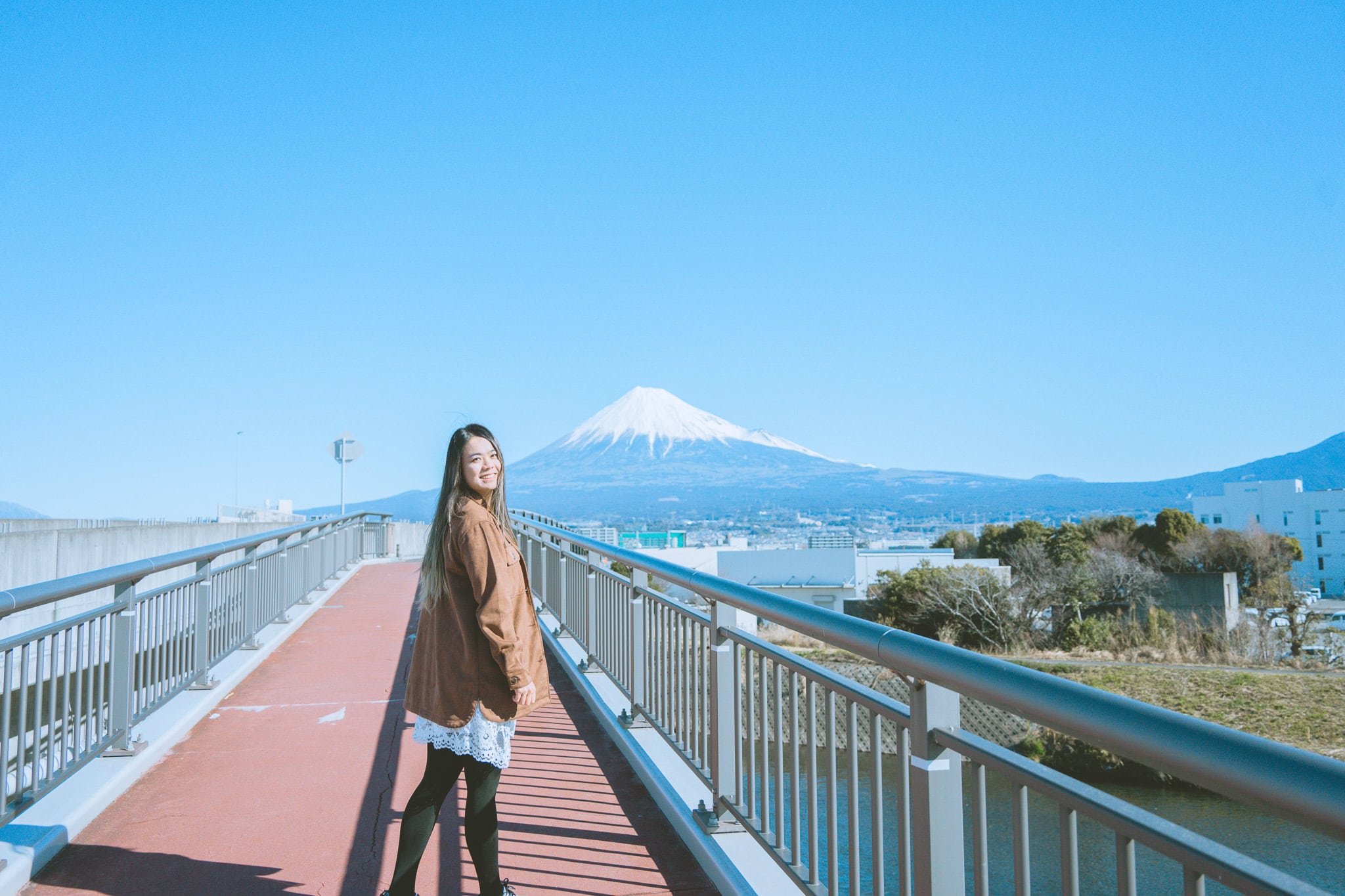
Yumeno Ohashi: We drove out to this pedestrian bridge ourselves, and it has one of the most peaceful, open views of Mt. Fuji we’ve found. It’s a local favorite, not a tourist stop, so if you come early in the day you’ll likely have it all to yourself.
Fuji Sky View Ferris Wheel: If you’re looking for a different way to see Mt. Fuji, this giant ferris wheel gives you a clear view from the top. It’s a fun angle, especially for photographers or anyone wanting something a little unexpected.
Mt. Fuji Marumo Tea Garden: The Mt. Fuji Infinity Tea Terrace sits in the middle of wide green tea fields with panoramic views of the mountain. You can actually lie back in the built-in terrace seating and look out over the landscape, with Suruga Bay in the distance. One of the most relaxing spots around if you’re after open skies and quiet.
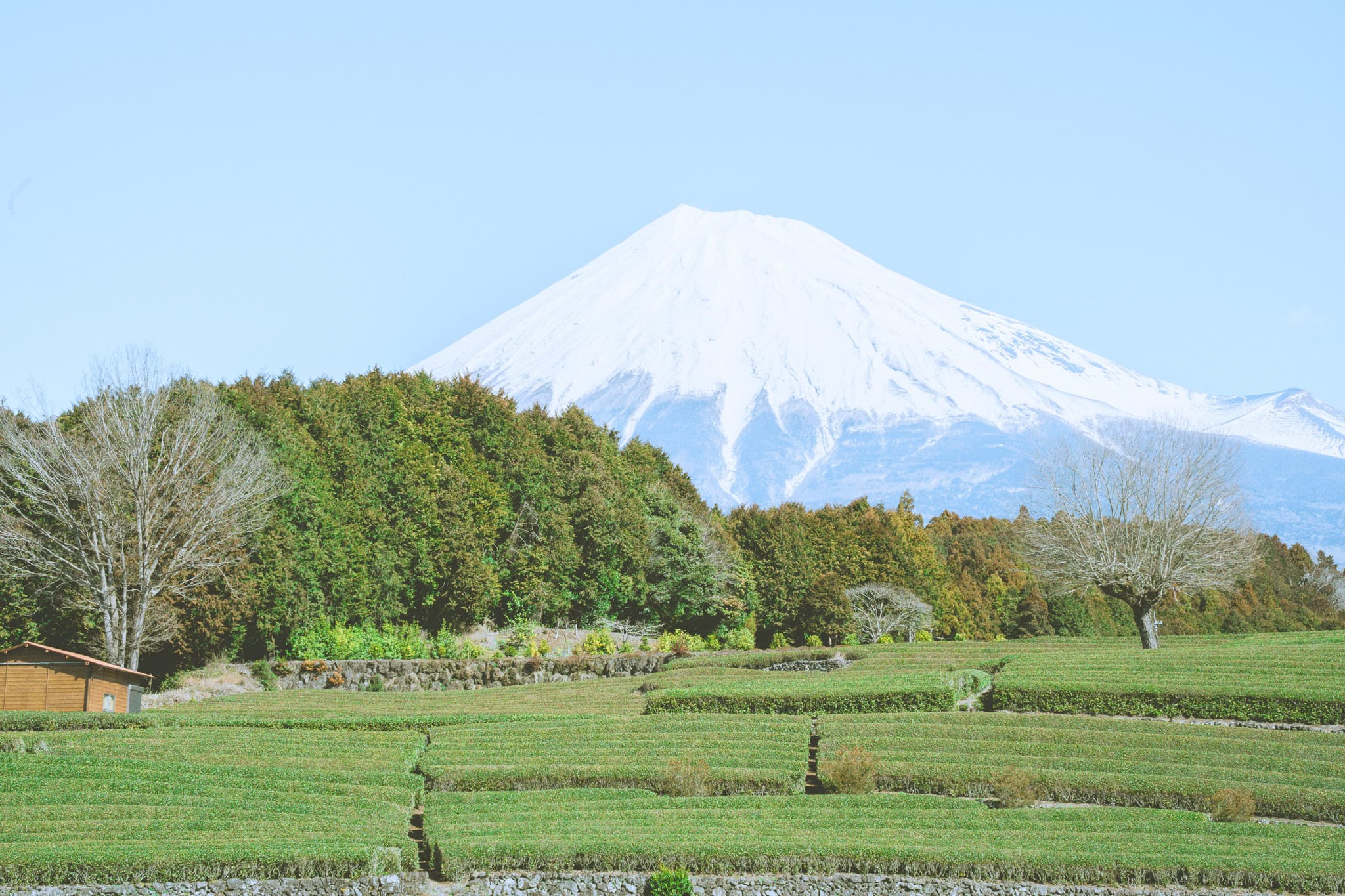
Bonus (if you’re driving): This is where the rental car pays off. We’ve done both of these: Makaino Farm is a great countryside getaway with animals, hands-on activities, and wide open fields, and Obuchi Sasaba is the famous tea field where Mt. Fuji rises right behind the rows of green.
Mt. Fuji Hotels with Private Onsen
Having a private onsen in your room is the ultimate Mt. Fuji luxury. It’s one of the most peaceful and elevated ways to view Mt. Fuji.
These stays come with a higher price tag, of course, but for the level of comfort, privacy, and views they offer, it’s well worth the splurge if you’re after something special.
📍Mt. Fuji Resort Glamping Yamanakako ($$$$): Best for glamping with outdoor onsen
📍Fujisan Onsen Bessho SASA ($$$$$): Best for luxury and Mt. Fuji views
📍Fufu Kawaguchiko ($$$$$): Best for luxurious modern ryokan design
📍Hakai Konohanakan ($$$$$): Best for a romantic getaway with private onsen
📍Mt. Fuji View and Private Sauna Ryokan Shizuku ($$$$): Best for private open-air bath and sauna
That said, the private onsen isn’t for everyone. If you don’t like getting into warm water, or bathing just isn’t your thing, the price tag here might not fit your travel style: the view hotels below get you the same Mt. Fuji views for a lot less.
Best Mt. Fuji View Hotels
Waking up to a clear view of Mt. Fuji directly from your hotel room is something you just can’t forget.
While visibility depends on the weather, these hotels are consistently rated for their unobstructed mountain views. We’ve got you covered, from budget accommodation to higher-end options.
📍Fuji Premium Hotel ($): Best bang for your buck with Fuji views from budget rooms
📍Hotel New Century ($$): Best value stay with Mt. Fuji view from rooms
📍Nekoana Glamping Dome House ($$$): Panoramic Fuji views in a glamping setting
📍Hoshinoya Fuji ($$$$$): Luxurious glamping and great service with beautiful Fuji views
📍Fufu Kawaguchiko ($$$$$): Luxurious modern ryokan design with spa experiences
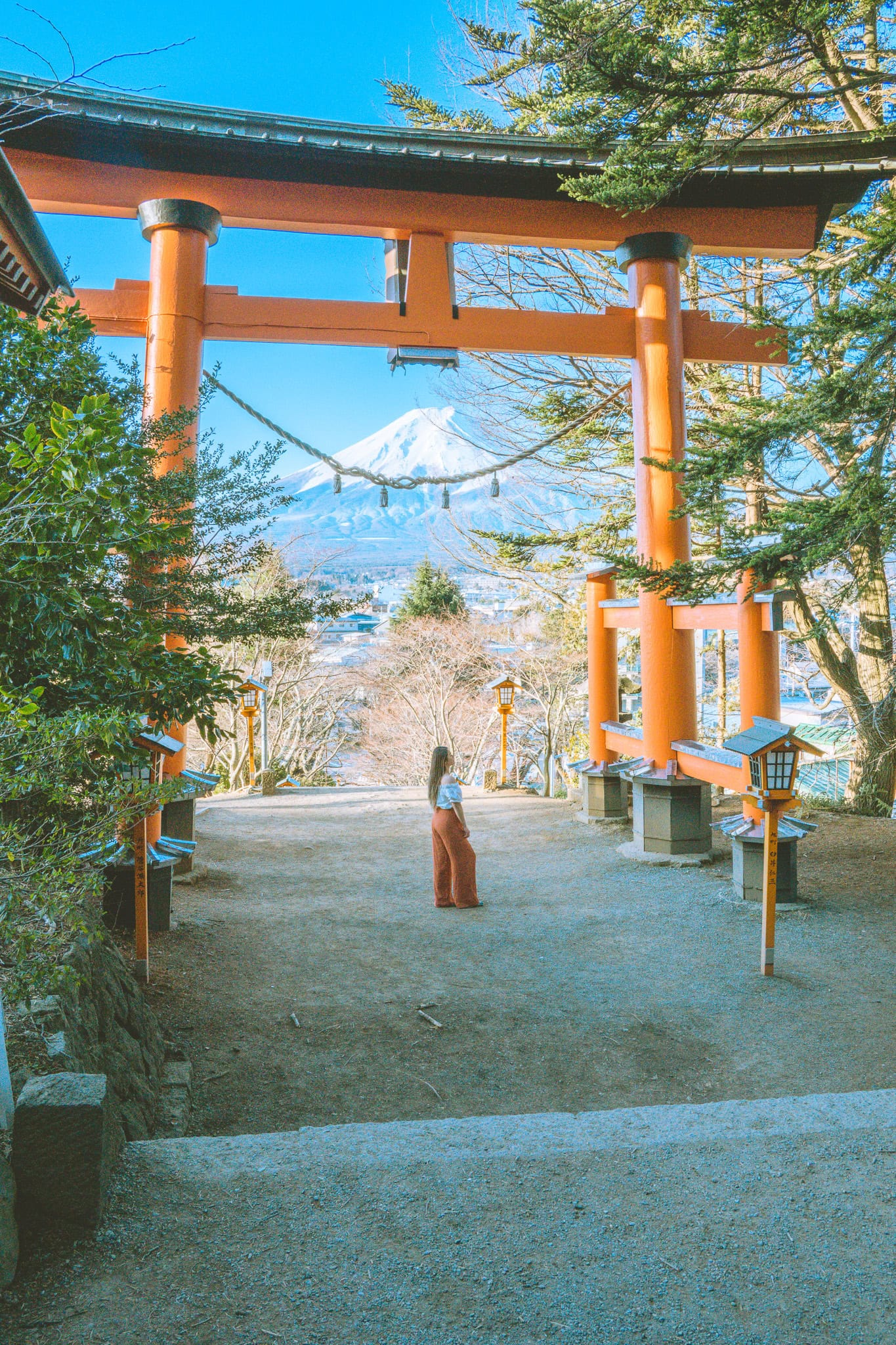
Cheap Mt. Fuji Hotels with Some Views (Budget Picks Under $80)
Of course, not everyone can drop several hundred or close to a thousand a night for a luxury ryokan with private onsen views of Mt. Fuji.
Back when we were students living in Tokyo, $500 nights were not even close to an option. We did the cheap stays and still caught some of the best views Japan has to offer.
Once you can finally splurge, you’re unlocking a whole different level of experience money can buy 🙂
These picks are for those on a budget. Whether you’re traveling solo, with friends, or just passing through for one night, these hotels offer great value.
Top Budget Stays Near Mt. Fuji
📍Fuji Premium Hotel ($): Best bang for your buck, clean rooms, great value, and even some Fuji views
📍Fuji Matsuzono Hotel ($): Best cheap hotel with views of Lake Yamanakako
📍Hostel Fuji Matsuyama Base ($): Best for budget travelers looking for a base near the 5th Station
Mt. Fuji Hotels Near Train Stations
If you’re planning a day trip from Tokyo or just want to be close to public transportation, staying near a train station makes life a lot easier. These hotels are all within about 10 minutes of major transit hubs like Kawaguchiko Station or Fujikyu Mt. Fuji Station, perfect if you’re getting around by train and bus.
This is also a great area to base yourself if you’re using the Mt. Fuji Pass, which saves money on transport and attractions. You’ll be close to Fuji-Q Highland, the sightseeing buses, and easy connections back to Tokyo.
📍Mount Fuji Panorama Glamping ($$): Outdoor sauna with Mt. Fuji views
📍Hotel Mystays Fuji Onsen Resort ($$): Best for convenience to Fuji-Q Highland
📍RISA Inn Fuji ($$$): Best for staying near Fujikyu Mt. Fuji Station
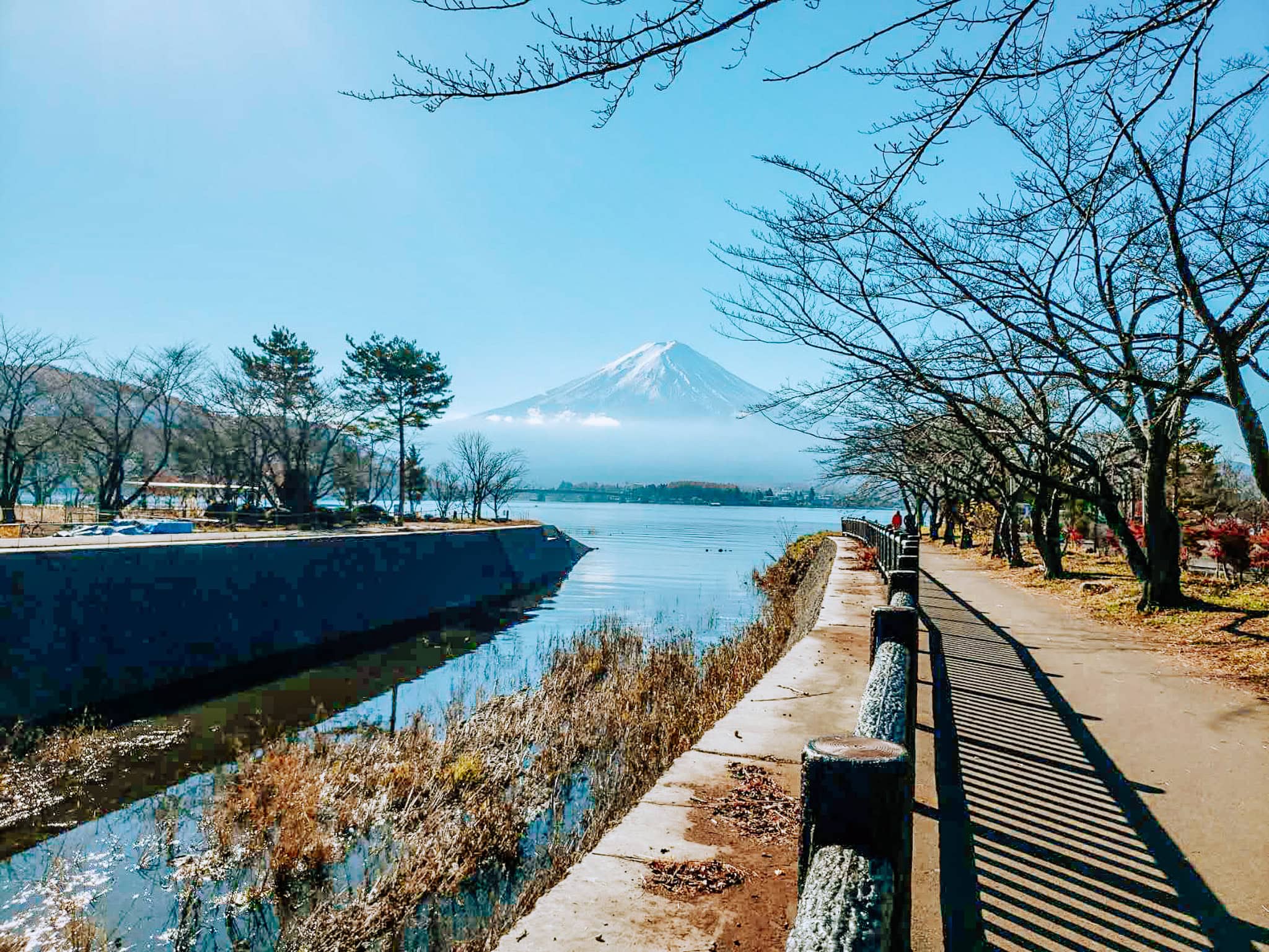
Where to Stay on Mt. Fuji
If you’re climbing Mt. Fuji and want to catch the sunrise from above the clouds, staying overnight at one of the mountain huts is your best bet.
These aren’t your typical hotels: they’re basic, no-frills shelters built for rest and warmth on your way up Japan’s tallest peak.
Can you sleep on Mt. Fuji?
Yes, you can sleep at the 10th station in a hut like Chojo Fujikan, located right near the summit. It’s definitely not luxury, but if you’re okay with basic and rustic conditions, it gets the job done.
How much does it cost to sleep on Mt. Fuji?
Prices usually range from 6,000 to 15,000 yen per person, depending on whether meals are included. Expect futons, shared blankets, simple meals like curry and rice, and communal bathrooms.
Compared to the comfort of a ryokan, it’s a lot more bare-bones, but for the experience of a sunrise summit, many say it’s worth it.
Most huts require reservations ahead of time. You can book online here or by phone, but note that cancellations often come with fees, especially during peak climbing season.
And if you want one real bed before the trail:
📍Fujikyu Unjo-kaku ($, 5th Station): Capsule-style stay and the last “civilized” hotel before you hit the trail
Helpful Resources to Plan Your Trip to Mt. Fuji
Planning a trip to Mt. Fuji can feel like a lot, especially if you want to time it right and actually catch a good view. That’s why we’ve put together a few extra guides to make things easier.
If you’re trying to figure out when the mountain is most visible, check out our Mt. Fuji Visibility Guide. It walks you through the best months, times of day, and weather patterns so you don’t show up and miss the view.
We also have a Best Viewpoints Around Mt. Fuji guide that maps out the most scenic spots.
And if you’d rather skip the busy spots entirely, our Best Places to View Mt. Fuji Without Crowds covers the quiet ones many tourists never find.
Thinking about our value pick? We wrote a full review of Hotel New Century with room photos and what to expect from a stay there.
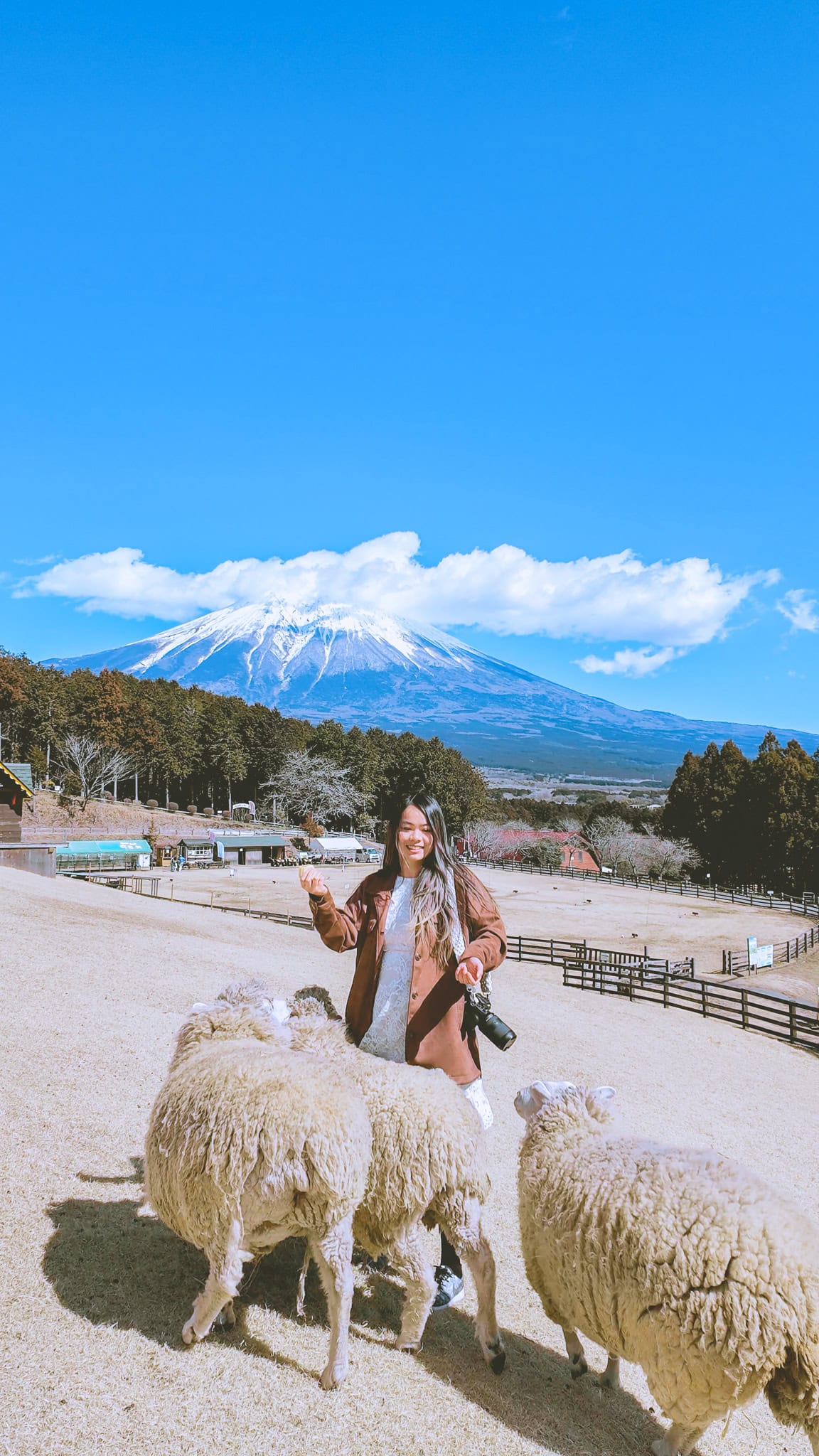
FAQ About Staying Near Mt. Fuji
What is the best town to stay in to see Mt. Fuji?
For us, it’s Kawaguchiko. It has the classic lake reflection views, easy access from Kawaguchiko Station, and you’re close to Fuji-Q Highland, Arakurayama Sengen Park, and Fujiyoshida.
If you want the same view with fewer people, Yamanakako is our runner-up.
Is it worth staying overnight near Mount Fuji?
Yes, absolutely. Staying overnight near Mt. Fuji gives you the chance to see the mountain in its best light (literally). Early mornings around sunrise are when the skies are clearest, giving you those unforgettable views without the daytime crowds.
Spending the night also lets you hit the popular spots before the day-trip crowds roll in. That’s one of our favorite perks, and honestly, waking up at 4 a.m. just once for that view is totally worth it.
It also gives you more time to enjoy the surrounding lakes, hot springs, and peaceful nature that most people rush through.
That said, if your trip is short overall, a day trip to Mt. Fuji is still a great option and very doable.
Should I stay in Hakone or Kawaguchiko?
If your main goal is to see Mt. Fuji in all its glory, Kawaguchiko is the better choice. It’s closer to the mountain, has the classic views you see in all the photos, and tons of options for hotels, viewpoints, and lakeside walks.
Hakone, on the other hand, is ideal if you want variety: think art museums, ropeways, onsen eggs, and cruise boats. It’s one of the most famous onsen towns near Tokyo, but because it’s farther away from the mountain, the views aren’t as good.
Is it cheaper to stay in Kawaguchiko or Hakone?
Kawaguchiko, generally. It has true budget picks under $80, while Hakone’s famous ryokan pricing starts higher (our Hakone pick Matsuzakaya Honten runs $385 to $650 a night).
The cheapest base overall is actually the Shin-Fuji Station area, where Hotel Route Inn runs $62 to $80 and you trade the lake views for hidden-gem viewpoints.
How many days do you need in Mt. Fuji?
You can absolutely do Mt. Fuji as a day trip from Tokyo, and many people do. But if you want the full experience, from relaxing in an onsen to catching the mountain from different angles, we recommend 2-3 days.
It gives you time to explore more than one area, slow down, and really soak in the peaceful vibe that makes this region so special.
Conclusion
If your itinerary allows even a little more time, we highly recommend spending the night. Waking up to that quiet morning view, catching sunrise before the crowds, and actually feeling the mountain atmosphere makes all the difference.
Still deciding? Here’s our short answer: base yourself in Kawaguchiko if this is your first overnight stay. And whatever you pick, book 2 to 3 months ahead, because the good view rooms don’t wait.
We hope this guide helped you figure out exactly where to stay and what kind of Mt. Fuji experience fits your plan. Enjoy!
You must be logged in to post a comment.