
Washi Paper Making Experience in Tokyo: A Hands-On Traditional Craft You’ll Enjoy
Traditional crafts are a big deal in Japan. Somehow, even in a city as modern as Tokyo, you’ll still find small studios quietly keeping centuries-old techniques alive…and one of the most beautiful examples is washi paper making.
I’d always known washi as those delicate Japanese papers and stationery tapes that make any desk look better. But I had no idea how it was actually made until we joined this washi-making workshop in Asakusa.
We participated in the workshop ourselves, talked with the artisans, and learned every step of the process. It was a very nice and relaxing experience.
If you’re curious about traditional crafts or looking for something cool and hands-on to add to your Tokyo itinerary, this guide has everything you need to know before you go.
Plan your trip with our favorite resources
Where to Stay in Japan: check best deals
Transport & activities: klook.com (save up to 10% with code DANAYAO)
eSIM for Japan: stay connected with Airalo
Things to Know About Washi Paper
A Quick History of Washi in Japan
Washi (和紙) literally means “Japanese paper,” and its roots go back more than 1,300 years. The craft originally came from China, but over time it evolved into something uniquely Japanese.
Traditional washi is made using fibers from native plants like kozo (mulberry), gampi, or mitsumata. These plants produce long, strong fibers that give washi its signature strength and soft translucence.
For centuries, washi has played a quiet but essential role in daily life: used for calligraphy, shoji screens, lanterns, and ceremonial art. It’s more than paper. It’s a living part of Japan’s cultural identity.
What Makes Washi Different from Regular Paper
Unlike modern paper made from wood pulp and machines, washi is handmade and 100% natural. Every sheet takes time, patience, and skill, often passed down through generations of artisans.
Here’s what sets it apart:
Durability: Despite being thin and light, washi is strong and tear-resistant.
Texture: It has an organic, warm feel that looks slightly translucent when held to the light.
Sustainability: Washi is made from renewable plants, making it both eco-friendly and biodegradable.
Artisanal Quality: No two sheets are ever identical. Each carries its own subtle texture and soul.
Washi goes beyond just paper, it’s a piece of craftsmanship that connects people, place, and tradition.
How Washi Is Used Today
Over the years, washi has evolved from being purely functional to becoming an art form of its own. You’ll find it today in:
Stationery & Crafts: Journals, origami, wrapping paper, and letter sets.
Interior Design: Lamps, wall panels, and traditional shoji doors.
Fashion & Accessories: Some brands now use washi fibers in clothing or paper-based jewelry.
Cultural Arts: Ukiyo-e woodblock printing, calligraphy, and ceremonial pieces.


Where You Can Make Your Own Washi Paper in Tokyo
If you’re looking for cool things to do in Tokyo that feel creative but still grounded in tradition, this one’s for you.
The Washi Paper Making Workshop in Asakusa is one of the few places in Tokyo where you can make handmade washi from start to finish.
It’s tucked just a one-minute walk from Nakamise Dori, right in the heart of one of Tokyo’s most historic neighborhoods. Easy to add to a day of exploring temples, snacks, and side streets.
What makes this studio special is that it teaches Tosa Washi, one of Japan’s “Three Great Washi Papers,” known for its high quality and smooth texture.

You’ll spend about 30 to 45 minutes learning from friendly instructors who guide you through each step: from scooping the pulp to pressing and drying your finished sheet.
Inside the shop, you’ll also find a variety of washi products and stationery items. Honestly, it was hard to walk out without buying a few souvenirs haha…everything was beautifully made and uniquely Japanese.
Here’s a full list of our favorite hands-on experience in Tokyo for you to check out.
The Washi Making Experience: Step by Step
Making your own washi paper might sound complicated, but once you start, it feels surprisingly intuitive. Here’s how it works:
Step 1: Mixing the Pulp
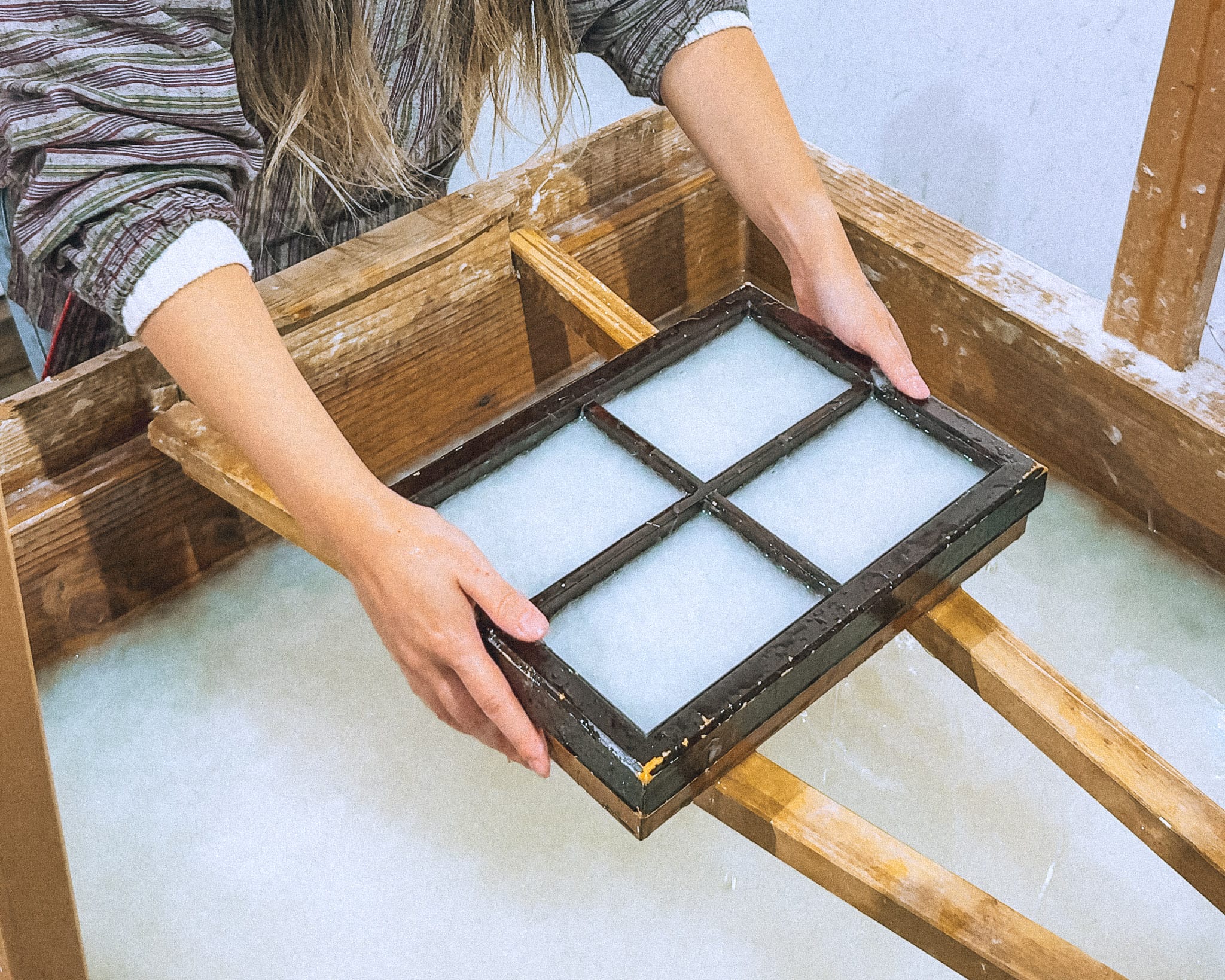
You’ll start by mixing water with natural plant fibers. The instructor explains how this soft pulp is what gives washi its strength and signature texture. Stirring it was surprisingly harder than it looked, but it also felt almost therapeutic.
Step 2: Sifting and Shaping
Next comes the fun part. You scoop the pulp onto a bamboo screen, then shake and tilt it to spread the fibers evenly. The motion feels both precise and soothing, and it’s oddly satisfying to see the thin, milky layer of paper start to form.
Step 3: Adding Colored Cards
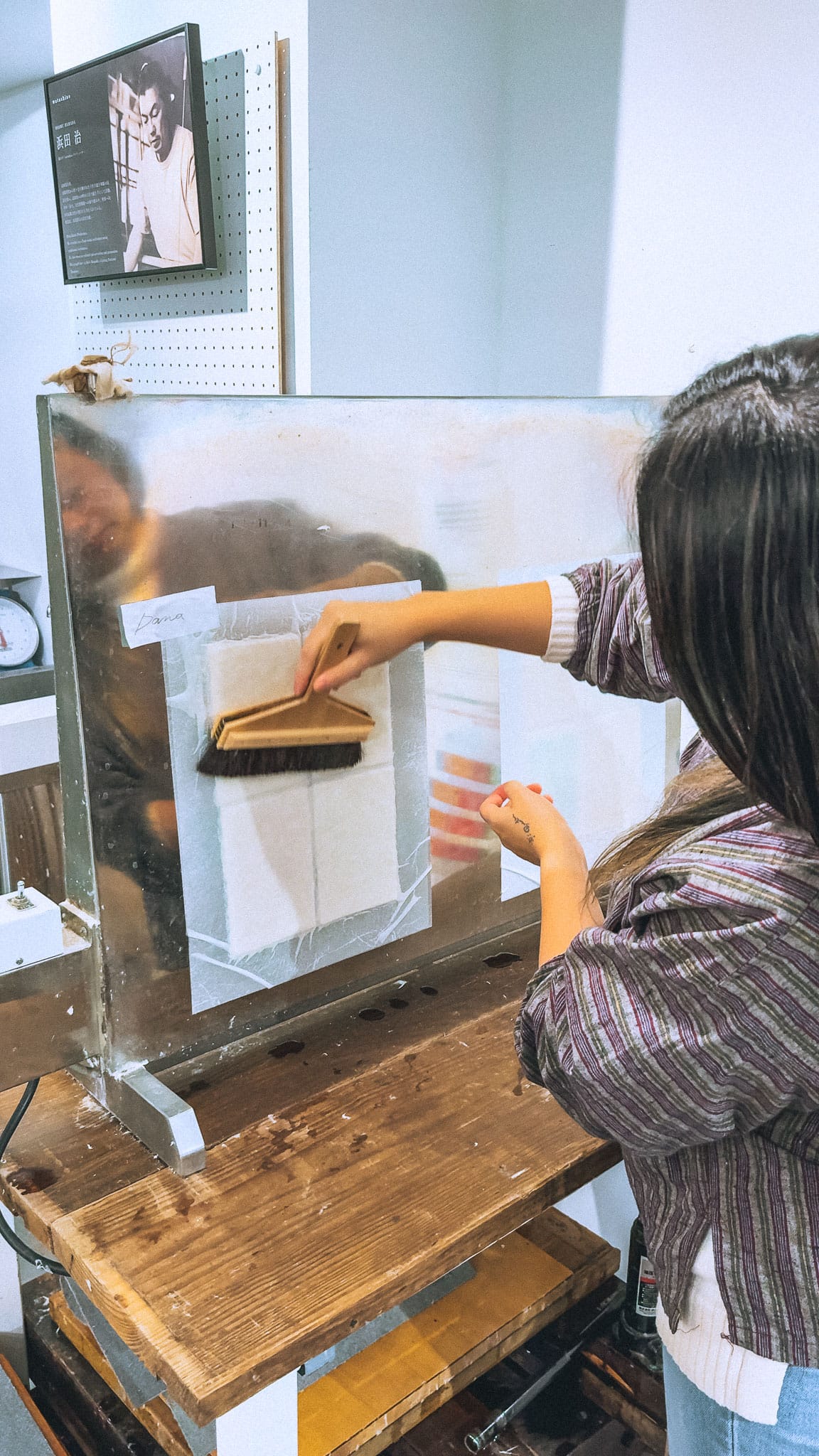
Here’s where you can get creative. The shop has pre-made thin, colored washi sheets that you can choose from to decorate your design. Every choice changes the final look, some people go with brighter colors, others keep it soft and minimal.
Step 4: Drying and Finishing
Once you’re happy with your design, the paper is gently pressed, drained, and left to dry. The staff takes care of the technical part, and a little while later, your finished sheet of washi appears.
The whole process takes about half an hour, but it’s the kind of activity that slows you down in the best way. It’s hands-on, relaxing, and you leave with something tangible you made yourself, a small but meaningful piece of Japan’s craft culture.

Our Experience Making Washi at This Workshop
The washi workshop was hidden on the second floor of a small building in Asakusa, one of those places you’d walk right past if you didn’t know it was there.
But inside, it opened up into the kind of cozy, creative space that makes you immediately want to stay awhile. Everything in the shop revolved around washi.
There were shelves lined with delicate paper goods, bookmarks, postcards, fans, and even accessories made from washi. It took everything in me not to start shopping before the workshop even began.
The atmosphere was calm but lively at the same time. The staff were warm and genuinely fun to talk to. They told us stories about how the shop started and how traditional crafts like this have changed over time.
It wasn’t just about making paper, it was about understanding how these traditions survive in modern Japan.
By the end, we had our own handmade sheets of washi, each completely different but equally beautiful. It was relaxing, creative, and one of those rare travel experiences that actually teaches you something while you’re doing it.


Conclusion
If you’re looking for something different to do in Tokyo, this washi paper making workshop in Asakusa is one of those rare finds that’s both hands-on and deeply cultural. You’re not just making paper…you’re trying a centuries-old tradition and learning why Japan treats even the simplest crafts with so much care.
It’s peaceful, creative, and memorable. Plus, you leave with something you actually made yourself, a perfect souvenir that feels meaningful without being touristy.
Whether you’re a stationery lover, a design nerd, or just someone who likes trying local crafts, washi making in Japan deserves a spot on your itinerary.
You must be logged in to post a comment.