
How to Buy Shinkansen Tickets in 2026: Japan Bullet Train Complete Guide
The first time we rode the Shinkansen from Tokyo to Kyoto, I remember thinking, wow, this is how trains should be. It was fast, comfortable, quiet, and convenient all at once.
Years later, when my parents visited Japan, the thing they couldn’t stop talking about wasn’t the food or temples…it was the bullet train. And I get it. The Shinkansen is one of the most impressive transportation systems in the world, and for most travelers, it becomes a highlight of the trip.
If you’re planning a multi-city Japan itinerary, you’re almost guaranteed to ride the Shinkansen at least once. This guide breaks down everything you need to know about Japan’s bullet trains: how to buy tickets, how much they cost, what passes you might need, and a few small tips that make the ride even smoother.
Plan your trip with our favorite resources
Where to Stay in Japan: check best deals
Transport & activities: klook.com (save up to 10% with code DANAYAO)
eSIM for Japan: stay connected with Airalo
Shinkansen / Japan Bullet Train 101
The Shinkansen, also known as Japan’s bullet train, is one of the country’s most impressive and efficient transportation systems.
It connects major cities across Japan with remarkable speed, comfort, and reliability. Trains run at speeds of up to 320 kilometers per hour and are famous for their punctuality, safety, and efficiency.
Whether you’re heading from Tokyo to Osaka, Kyoto, Hiroshima, or even up to Hokkaido, the Shinkansen makes long-distance travel smooth and stress-free.

What’s the Difference Between Bullet Train and Shinkansen?
They’re actually the same thing. “Shinkansen” is the Japanese name, while “bullet train” is simply what most visitors call it. Both refer to Japan’s high-speed train network that links major regions across the country.
Car Types and Seat Classes
There are three main seating options on the Shinkansen: ordinary cars, Green Cars, and Gran Class.
Ordinary cars
Ordinary cars are the standard seats and the most commonly used. They’re available as both reserved and non-reserved.
The seat layout is 3 seats on one side and 2 on the other, offering plenty of comfort for most travelers.
Non-reserved seats are slightly cheaper, but during busy travel seasons or when boarding from smaller stations, you might need to stand if the car is full.
Reserved seats guarantee you a spot and are worth the small additional cost, especially if you’re traveling with luggage or during peak times.

Green Cars
Green Cars are the next level up. Think of them as the business class of the Shinkansen. The seats are larger and arranged 2 by 2, with more legroom, nicer surroundings, and small amenities like footrests and adjustable lights. If you’re taking a longer trip or just want more space, it’s a worthwhile upgrade.
Gran Class
Gran Class is the most premium option, available only on select lines such as the Tohoku, Hokuriku, Joetsu, and Hokkaido Shinkansen.
It’s the equivalent of first class on an airplane, with wide reclining leather seats, dedicated staff, and complimentary snacks and drinks. It’s definitely a splurge, but if you want to experience the Shinkansen at its most luxurious, it’s worth trying once.
Reserved vs. Non-Reserved Seats
Most Shinkansen offer both reserved and non-reserved seating in separate cars.
Reserved seats can be booked up to one month in advance and give you peace of mind, especially during busy seasons like Golden Week, New Year, or Obon when trains can fill up quickly.
During these peak times, the Tokaido Shinkansen operates with reserved seating only.
Non-reserved seats work on a first-come, first-served basis. If you board from a major station at the start of the route, you’ll likely find a seat easily. But if you get on midway, it’s not uncommon to see people standing in the aisles until the next stop.
If you have a Japan Rail Pass, seat reservations are free, and you can make them at any JR Travel Center or through a ticket machine. Even though reservations aren’t mandatory, we highly recommend making one for comfort and convenience.
If you are combining Shinkansen with other train options, here’s our full guide on how to ride all trains in Japan.
How Much Do Shinkansen Tickets Cost
The price of a Shinkansen ticket depends on three main factors: the distance you travel, the train type, and the seat class you choose.
Because the bullet train network covers most of Japan, ticket prices can range widely, from short regional hops to long cross-country rides.
Typical Shinkansen Prices in 2026
For a quick idea, a one-way ticket from Tokyo to Osaka costs around 14,720 yen and takes roughly two and a half hours. Traveling from Osaka to Kyushu costs about 15,140 yen and takes two hours.
A longer ride from Tokyo to Hokkaido costs about 23,760 yen and takes around four and a half hours.
Prices can fluctuate slightly depending on whether you choose reserved, Green Car, or Gran Class seats.
Tip: Use code DANAYAO on Klook to get up to 10% off Shinkansen tickets!
Types of Trains and Price Differences
Even on the same route, prices can vary depending on the train category.
For example, between Tokyo and Osaka, you’ll be using the Tokaido Shinkansen, which offers three main types of trains: Nozomi, Hikari, and Kodama.
The Nozomi is the fastest and most direct option, stopping only at major cities. It’s the most expensive and not fully covered by the Japan Rail Pass, which means you’ll need to pay a small supplement if you’re using one.
The Hikari is slightly slower, making a few extra stops along the way but still very efficient.
The Kodama is the slowest, stopping at every station between cities. It’s a good choice if you want to explore smaller towns but not ideal if you’re in a hurry.

What Makes Up the Ticket Price
Each Shinkansen ticket includes a few separate fees combined into one total.
The base fare covers the distance between your departure and destination stations. The limited express fee is added for using the Shinkansen instead of a local train.
If you book a reserved seat, there’s a small reservation fee, usually between 300 and 2,000 yen depending on the route and travel period. Choosing a Green Car or Gran Class seat adds an extra charge for the upgraded comfort and service.
Why Is the Shinkansen So Expensive?
The Shinkansen’s higher price tag comes from its precision, safety, and service quality.
You’re paying for world-class punctuality, advanced technology, and comfort levels that make long rides feel easy.
It’s not the cheapest way to travel, but for reliability, convenience, and time saved, it’s often worth the cost, especially if your trip involves multiple cities.
Is Shinkansen First Class Worth It?
If you’ve never tried it or just really enjoy the extra comfort, it’s worth doing once.
For short rides, the upgrade might not make sense, but for longer trips, the extra space and calm can be a nice way to recharge while traveling.
How to Book Shinkansen / Japan Bullet Train Tickets
Booking Shinkansen tickets is simple once you know the options. You can buy them in person at any JR station in Japan, or online before your trip through trusted booking platforms.
No matter which method you choose, you’ll need the same basic details: the number of travelers, your travel date, departure and destination stations, and whether you want reserved or Green Car seats.
Booking In Person
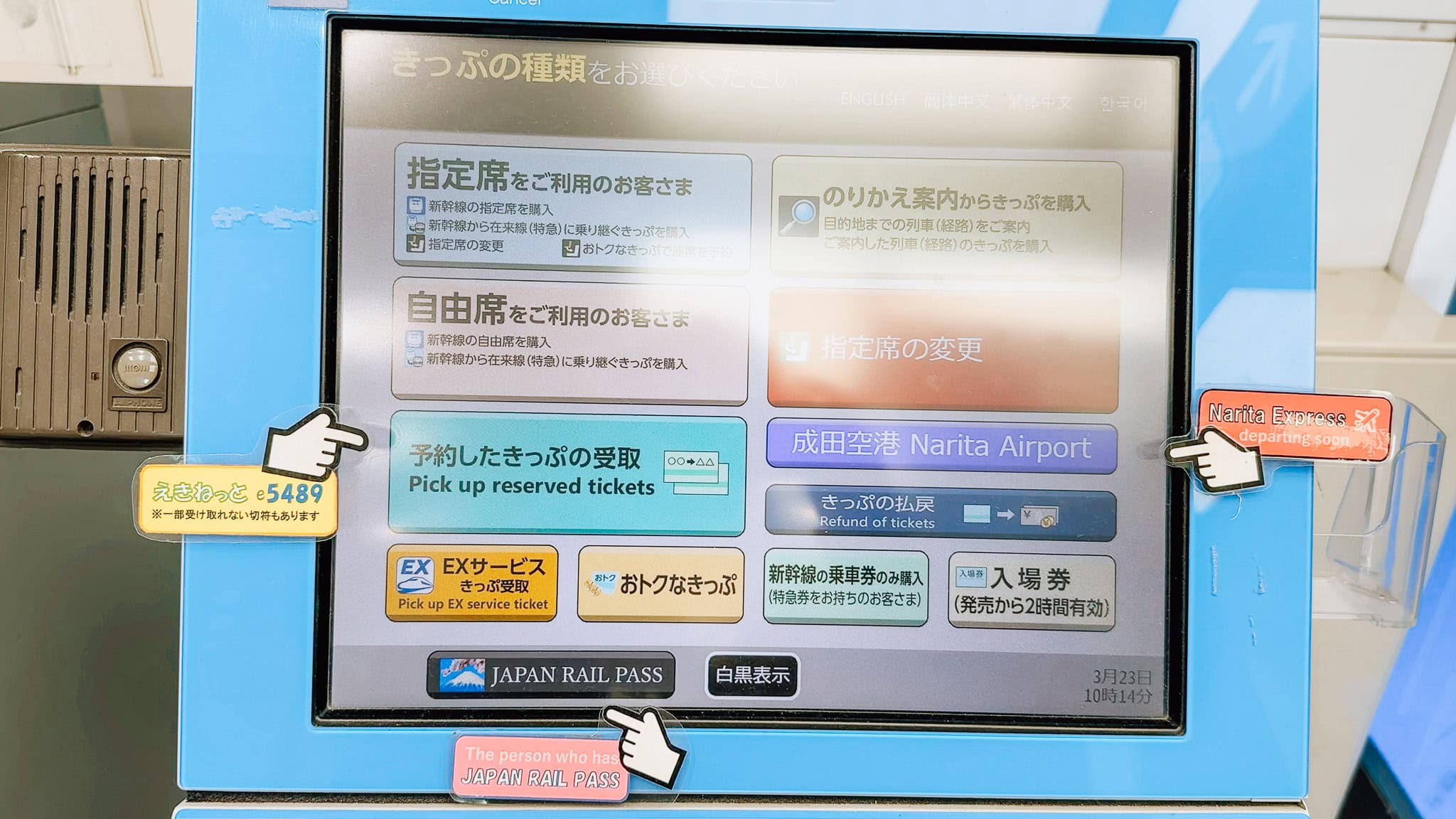
You can buy Shinkansen tickets at any JR ticket office (look for the green “Midori no Madoguchi” sign) or at a designated JR ticket machine inside major train stations.
Ticket machines now have English menus and accept most major credit cards, making the process straightforward even if you don’t speak Japanese.
If you’re unsure of the train name or time, it helps to write down your details on a note and show it to the station staff. Most of them are used to helping travelers and will quickly find the best option for your route.
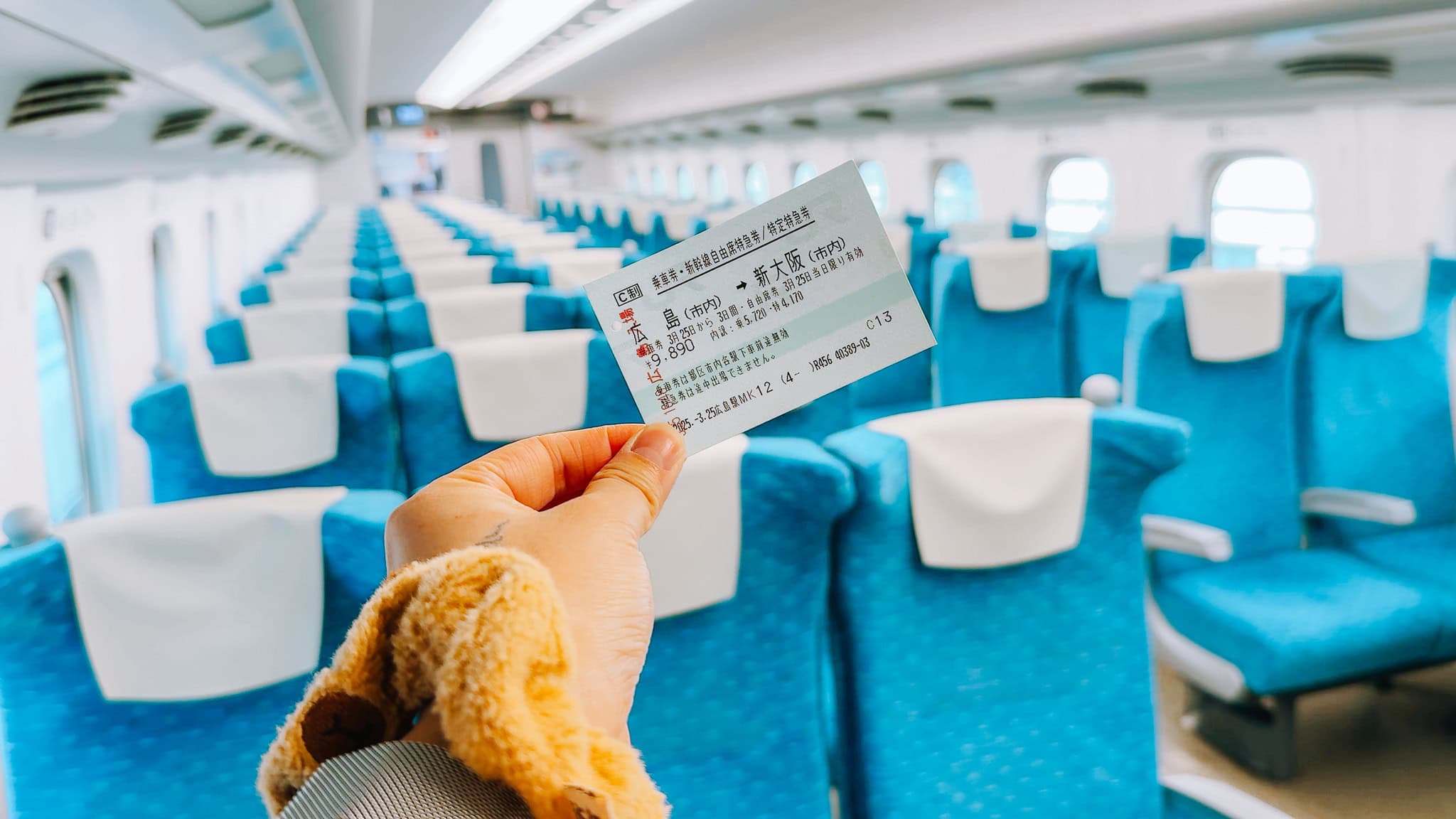
Once you purchase your ticket, you’ll receive a small paper ticket or two slips: one for the base fare and another for the Shinkansen express fee. Keep both, as you’ll need to insert them together at the ticket gate before boarding.

Booking Online in Advance
If you prefer to plan ahead, booking online is just as easy. You can reserve seats through official JR websites or travel platforms like Klook or Japan Rail Pass booking portals.
These sites let you select your date, route, and seat preference and then pick up your ticket at the station or use a digital QR code at the gate.
If you want to skip the line and secure your seats before arriving in Japan, this is the best option. It’s especially helpful during peak seasons when trains can sell out quickly.
We usually book through Klook for convenience.
Tip: Use code DANAYAO on Klook to get up to 10% off Shinkansen tickets!
Should You Book Shinkansen Tickets in Advance?
If you like peace of mind and want your plans set before you land, booking in advance is the way to go, especially for busy routes like Tokyo to Osaka or Tokyo to Kyoto during Golden Week, New Year, or cherry blossom season.
If you prefer to stay flexible, you can buy tickets on the same day without much issue, particularly for less crowded routes. Just know that during national holidays, trains can sell out, and non-reserved cars might fill up quickly.
Our honest recommendation: book in advance when you can, and stay spontaneous only when your itinerary allows it. It saves you time and guarantees a smoother trip, especially if you’re moving between multiple cities.
To be extra prepared, we’ve got a list of first things you need to do upon arriving in Japan to help you get going.

What Pass Do I Need for the Bullet Train in Japan
The right pass depends entirely on where you’re traveling in Japan. If your trip includes multiple cities or long distances, a rail pass can save you both time and money. Japan offers several different options, from nationwide coverage to region-specific passes, so it’s worth picking the one that fits your route best.
Here are the most popular passes and what they include:
JR National Pass: This is the most well-known and flexible option. It allows unlimited JR travel throughout Japan for a set number of days: 7, 14, or 21, covering most Shinkansen routes except for the Nozomi and Mizuho services. It also comes with the highest price tag, and here’s our full guide on whether the national pass is worth it.
JR Kansai Wide Area Pass: Covers the Sanyo Shinkansen between Shin-Osaka and Okayama, as well as major cities across the Kansai region like Kyoto, Kobe, and Himeji. It’s perfect for those focusing their trip in western Japan without needing full national coverage.
JR Kansai–Hiroshima Area Pass: Extends coverage beyond Okayama all the way to Hiroshima. This is great for travelers who want to include both Kansai and western Honshu destinations in one itinerary.
Hokuriku Arch Pass: Connects Tokyo and Osaka via the Hokuriku region, including Nagano, Kanazawa, and Toyama. It covers the Hokuriku Shinkansen and several limited express routes, making it ideal for travelers who want a scenic route between eastern and western Japan.
If you’re unsure which one fits your trip, think about how far you plan to travel and use the Shinkansen or JR calculator to find out whether you will be able to make the money back.

How to Use the Shinkansen
Once you’ve got your ticket, using the Shinkansen is actually simple. Stations are well-marked in both Japanese and English, and everything runs with the kind of precision Japan is known for.
To start, enter through the Shinkansen ticket gate. If you have a single ticket, insert it into the gate and retrieve it as you walk through.
If you have two tickets: one for the base fare and one for the express surcharge, insert both at the same time. You’ll get them back on the other side and will need them again when exiting at your destination.

After passing the gate, follow the signs to your Shinkansen platform. Platforms are clearly labeled with train names, destinations, and departure times. Each car number is marked on the ground, so it’s easy to line up exactly where your car will stop. Reserved, non-reserved, and Green Car sections are separated, so double-check your ticket before boarding.
When you reach your car and seat, you’ll find the trains clean and quiet. Luggage racks are above the seats, and there’s also space behind the last row in each car for larger suitcases.
If you’re traveling with oversized luggage, check the size restrictions in advance, some routes require you to reserve an oversized baggage area or pay a small handling fee. For travelers with multiple suitcases, it’s often easier to use Japan’s luggage delivery service to send your bags to your next hotel.

Amenities and Onboard Services
Every Shinkansen has free Wi-Fi, power outlets, restrooms, and trash cans. Some trains have smoking rooms located in specific cars.
Food trolleys used to be common, but they’ve become less frequent, especially on shorter routes. For longer trips, grab a bento box at the station before you board, known as ekiben, these boxed meals are one of the most fun parts of Shinkansen travel.

Shinkansen Manners and Etiquette
Shinkansen travel is efficient because everyone respects the unspoken rules.
Line up on the marked platform lines before boarding. Keep your luggage out of the aisle and your voice low while on board.
Recline your seat gently and check behind you before doing so. Switch your phone to silent mode and avoid taking calls inside the seating area. Before leaving, return your seat to its upright position and take any trash with you.
These small courtesies help keep the experience as pleasant as the ride itself.
FAQ About Shinkansen in Japan
Even if you have already taken the Shinkansen once or twice, there are a few questions that almost everyone asks at some point.
Can you eat on the Shinkansen?
Yes, you can.
Eating on the Shinkansen is completely normal in Japan, especially on longer routes. You will find ekiben, which are regional bento boxes made just for train travel, sold at major stations before boarding.
They are beautifully packaged and often feature local specialties, from Hokkaido crab rice to Kyoto-style tofu dishes. Some even come self-heating, which still amazes me a little. Just be considerate of others when eating and avoid foods with strong smells.
Do Shinkansen tickets ever sell out?
They can, especially during Japan’s three busiest travel seasons: Golden Week (late April to early May), Obon (mid-August), and New Year holidays (late December to early January).
During these times, trains often reach full capacity and reserved seats can disappear fast. If you are traveling during these periods or along major routes such as Tokyo to Kyoto, it is best to book your tickets as early as possible.
Outside of those seasons, it is rare for tickets to completely sell out. You can usually find seats even on the day of travel, particularly for shorter trips or less crowded times of day.
Tip: Use code DANAYAO on Klook to get up to 10% off Shinkansen tickets!
Can I use Suica for the Shinkansen?
Technically yes. But it is a super complicated method and to be honest…why bother.
You can use IC cards such as Suica or Pasmo through online systems like SmartEX or EX-IC, which let you reserve and board using only your IC card instead of paper tickets. However, setup can be confusing for short-term visitors and not every Shinkansen line supports this feature.
For most travelers, it is easier to use a regular paper ticket or a digital QR code if you booked online. If you want to read more about the IC card option, check the official SmartEX site here.
How do I handle luggage on the Shinkansen?
Each car has overhead racks for small suitcases and bags, plus extra storage space behind the last row of seats. If your luggage is oversized, meaning over 160 centimeters total in combined length, width, and height, you may need to reserve a seat in the designated oversized baggage area. The process is simple and can be done when you book your ticket.
If you are traveling with multiple large bags, it is often easier to use Japan’s luggage delivery service to send your suitcases directly to your hotel. It is affordable, reliable, and saves you a lot of effort during transfers.

Conclusion
The Shinkansen is more than just a way to get from one city to another. It is part of the experience of traveling in Japan. From the quiet efficiency to the views rushing by your window, it is one of those wow moments.
Whether you are planning a short trip between Tokyo and Kyoto or exploring the country from Hokkaido to Kyushu, understanding how the Shinkansen works will make your travels smoother and more enjoyable.
We have taken the Shinkansen more times than we can count, and we still get excited to get on one. Once you experience it, you will understand why it is one of Japan’s most iconic travel experiences and why travelers around the world talk about it long after their trip is over.
You must be logged in to post a comment.